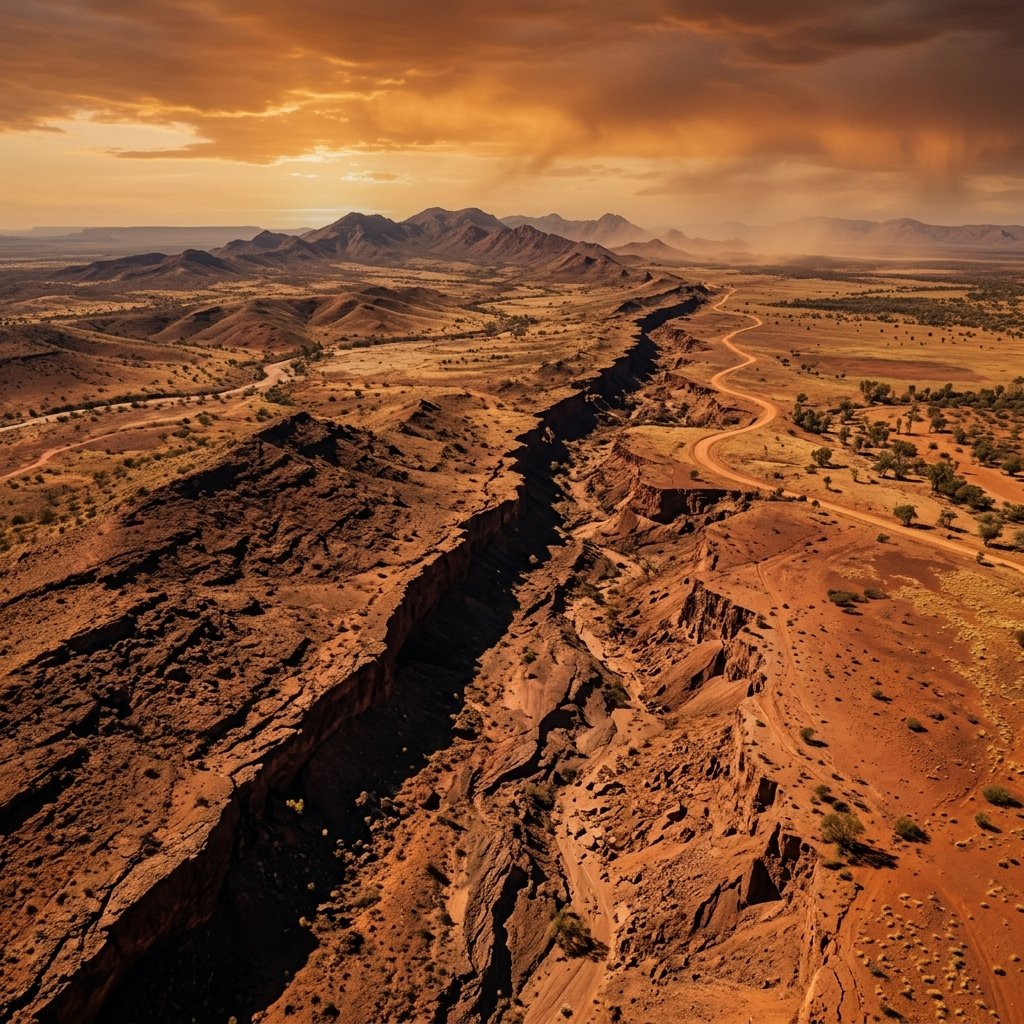
A Continent That Shakes in Silence
Earthquakes do not announce themselves. In the 60 seconds it takes to read this paragraph, somewhere on Earth, the ground will have moved. Most of these tremors are imperceptible — registered only by sensitive instruments buried deep in the bedrock. But occasionally, the energy that has been accumulating silently along a fault for thousands of years finds its release in a few violent seconds, and the consequences can be catastrophic.
Australia is not the Pacific Ring of Fire. We do not have the great subduction zone trenches of Japan, Chile, or Indonesia generating magnitude-9 megathrust events. But the notion that Australia is seismically quiet is contradicted by our own historical record. In December 1989, the city of Newcastle shook for less than a minute. Thirteen people died. Four billion dollars in damage reshaped the built environment of one of our largest regional cities. The fault responsible was not even on the map.
This archive explores the deep science of why the ground shakes — the mechanics of rupture, the architecture of tectonic plates, the behaviour of faults, and the chain of secondary hazards that a large earthquake sets in motion. It grounds that science in the Australian context: a continent moving relentlessly northward, building seismic hazard in ways that continue to surprise seismologists. And it looks at what happens when an earthquake is only the beginning.
Article Chapters
About This Archive
The Trembling Earth was developed to provide a rigorous, evidence-based account of earthquake science and its particular relevance to the Australian context. It forms the fourth instalment in the Australian Severe Weather series.