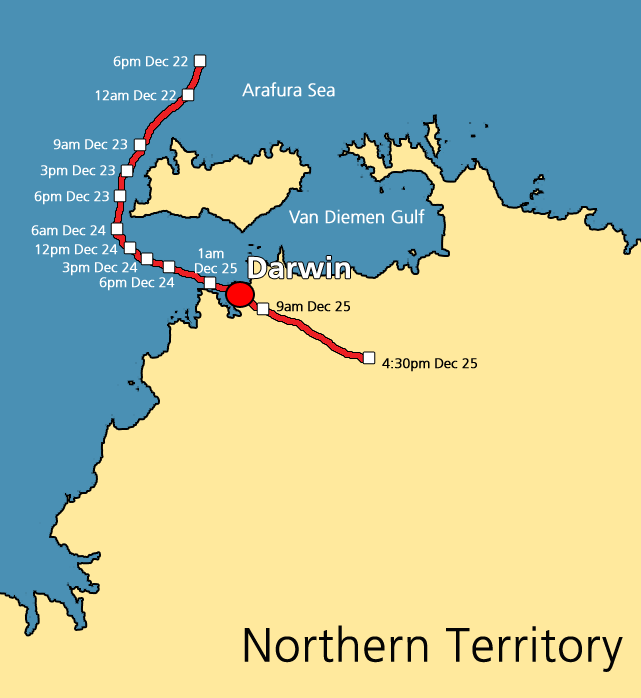
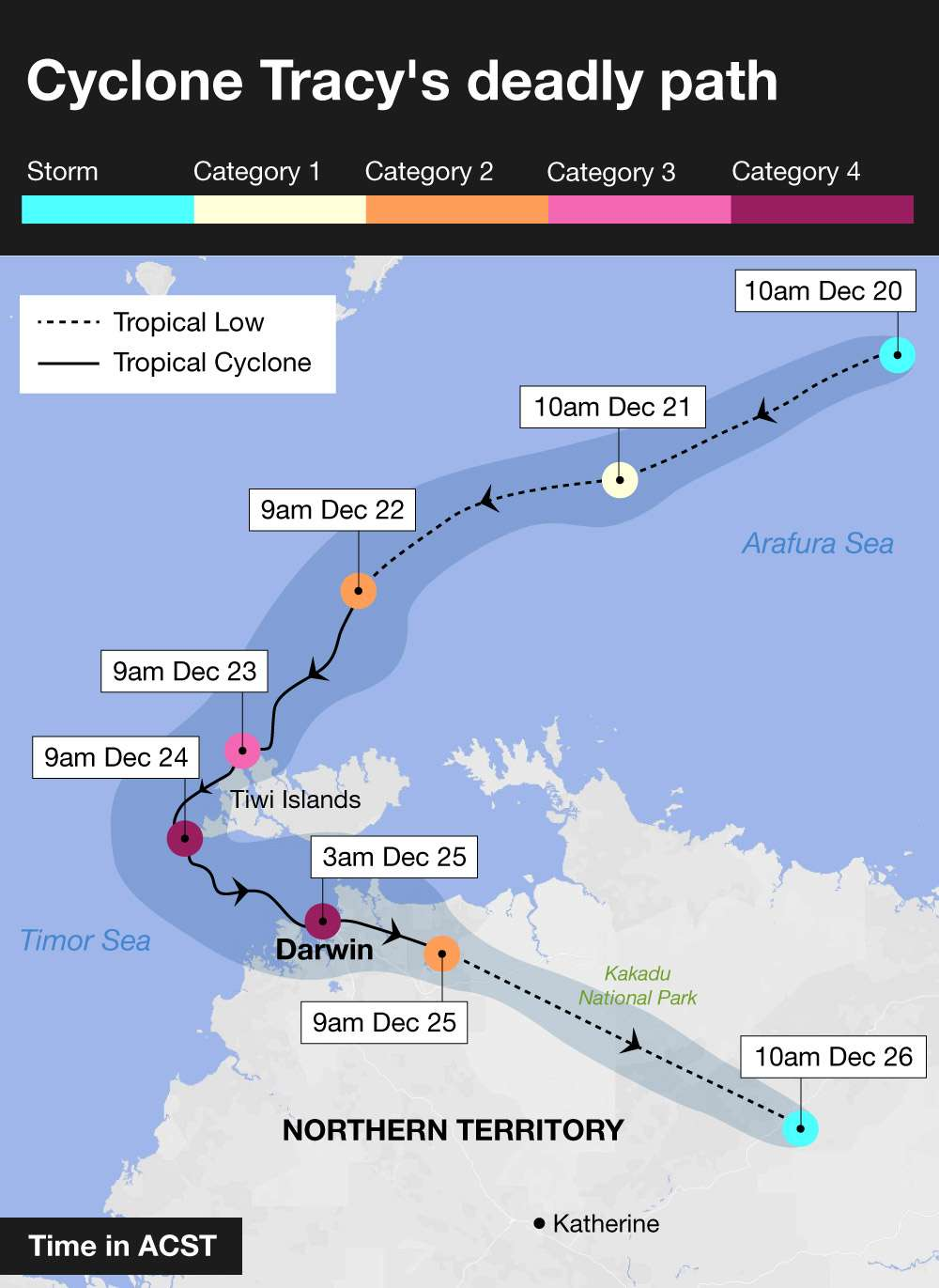
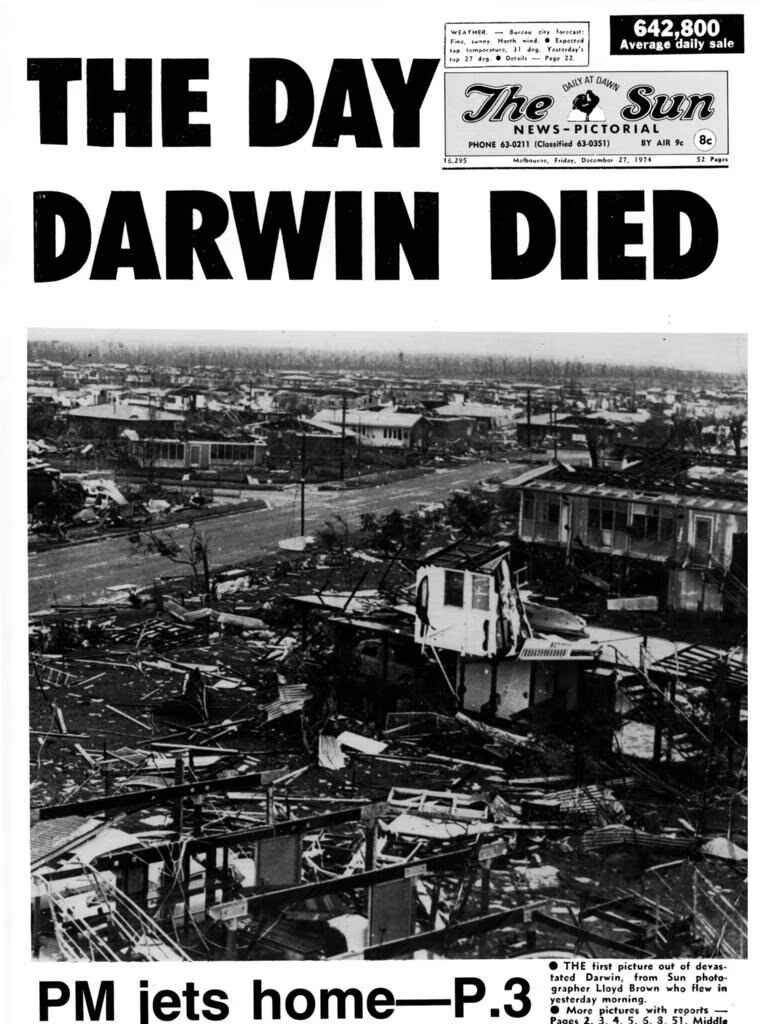
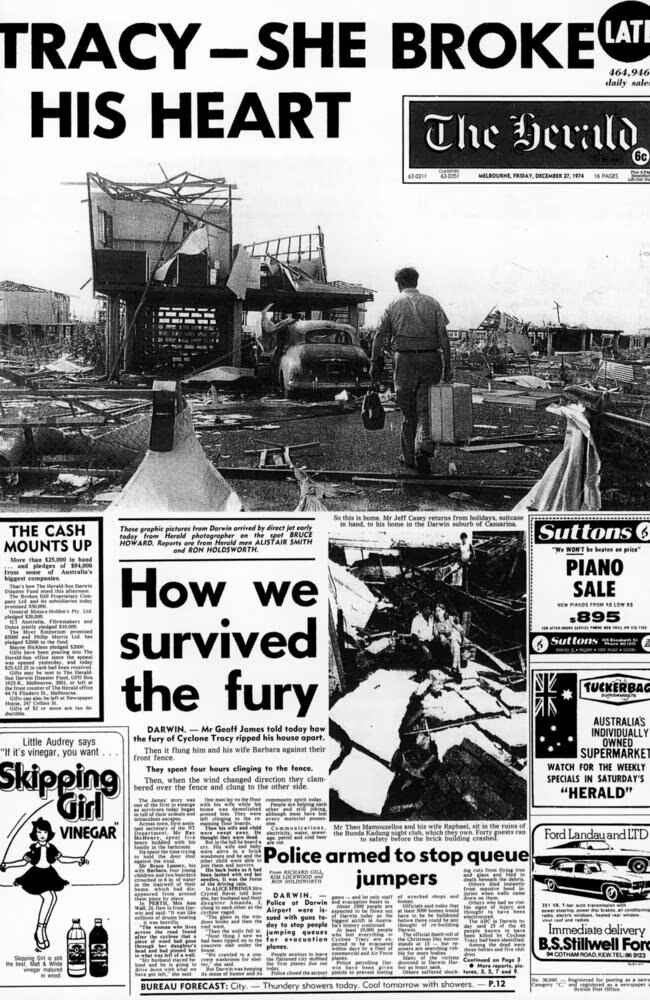
Christmas Eve in Darwin, 1974, was hot, humid, and heavy with anticipation. Not for the storm that was brewing hundreds of miles out in the Arafura Sea, but for the holiday celebrations. Families were unwrapping the last of the ham, children were restless with excitement, and the air conditioners hummed a collective drone across the northern capital. But the radio bulletins had begun to change tone. What was once a distant depression named Tracy had taken a sudden, malevolent turn.
By midnight, the festivities were over. The wind had picked up, stripping leaves from the frangipani trees and rattling the louvers of the elevated fibro houses that defined Darwin’s architecture. These structures, built for airflow rather than fortification, stood like fragile card houses in the path of a bowling ball.
Residents hunkered down, many assuming it would be another blow, a bit of rain, and a story for Boxing Day breakfast. They were wrong. At 3:00 AM on Christmas morning, the eye of Cyclone Tracy passed directly over the city, unleashing wind speeds that broke the anemometer at the airport after registering 217 km/h.
“We woke up to a world that had simply ceased to be. The house wasn't just damaged; it was gone. The street was gone. The landmarks were gone.
The Sound of Destruction
Survivors consistently recall the noise above all else. It wasn't just the wind; it was the sound of the city physically tearing apart. The screaming of twisting metal, the explosion of glass, and the grinding of timber. In the darkness, devoid of electricity, the auditory horror was amplified.
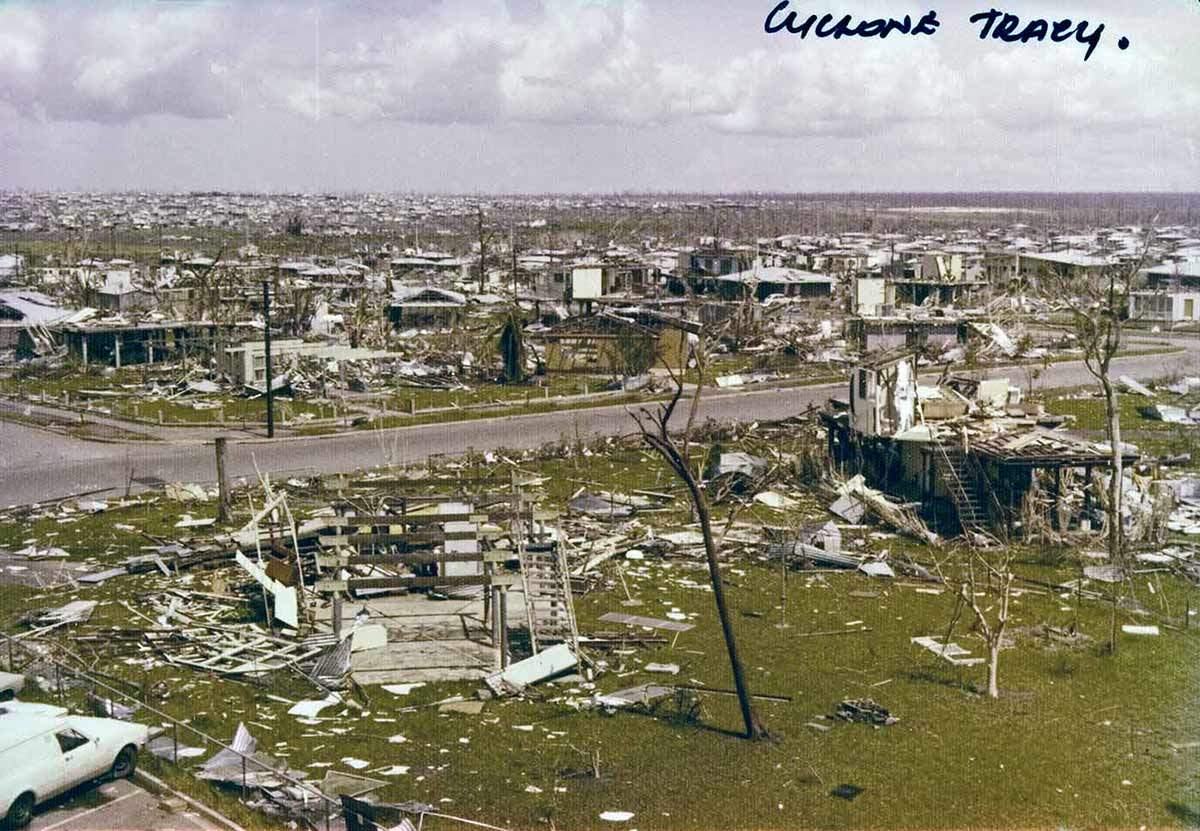
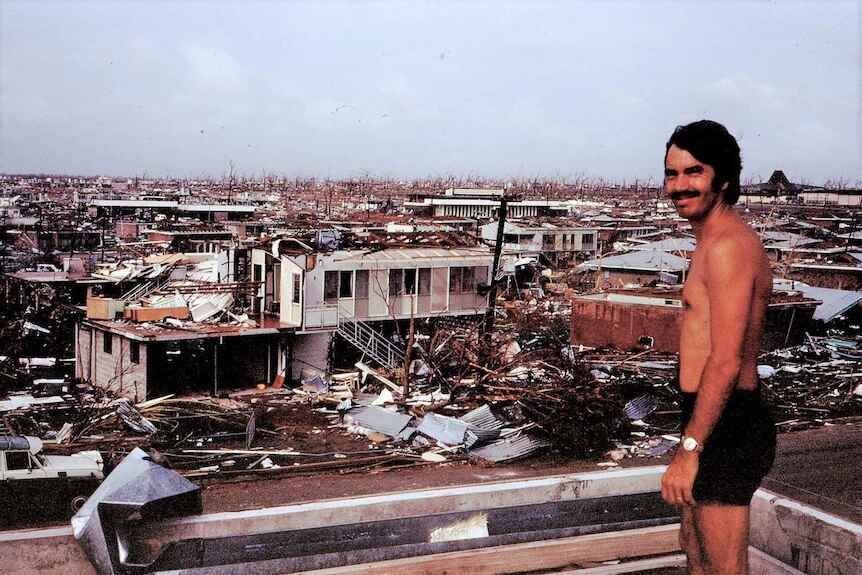
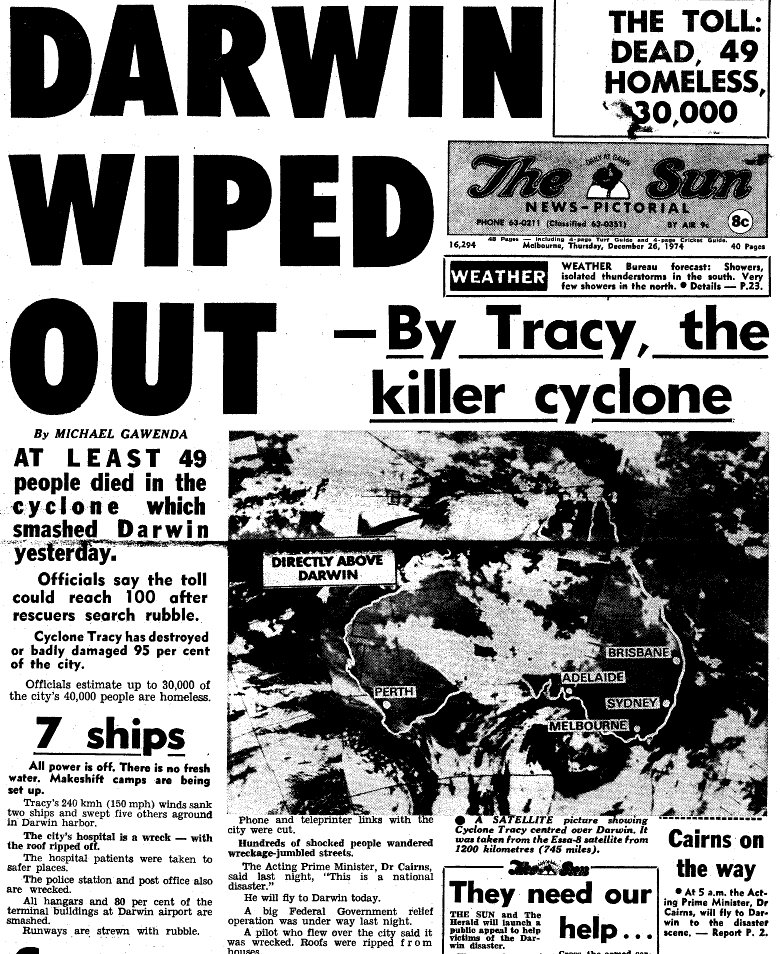
When the sun rose on Christmas morning, it illuminated a wasteland. The lush tropical foliage was stripped bare or uprooted entirely. Power lines lay snarled in the streets like black spaghetti. But the human toll was the most devastating realization. Sixty-six people had lost their lives in the chaos, and hundreds more were injured.
Operation Navy Help
In the days that followed, Darwin became the site of Australia's largest civil evacuation effort. With no power, no running water, and the threat of disease looming in the tropical heat, the decision was made to evacuate the majority of the population.
Over 30,000 people were airlifted out of the city in a matter of days. It reshaped the demographic of the city for decades. Many never returned, too traumatized by the memory of that Christmas morning. Those who stayed, however, forged a bond of resilience that defines Darwin's spirit to this day.