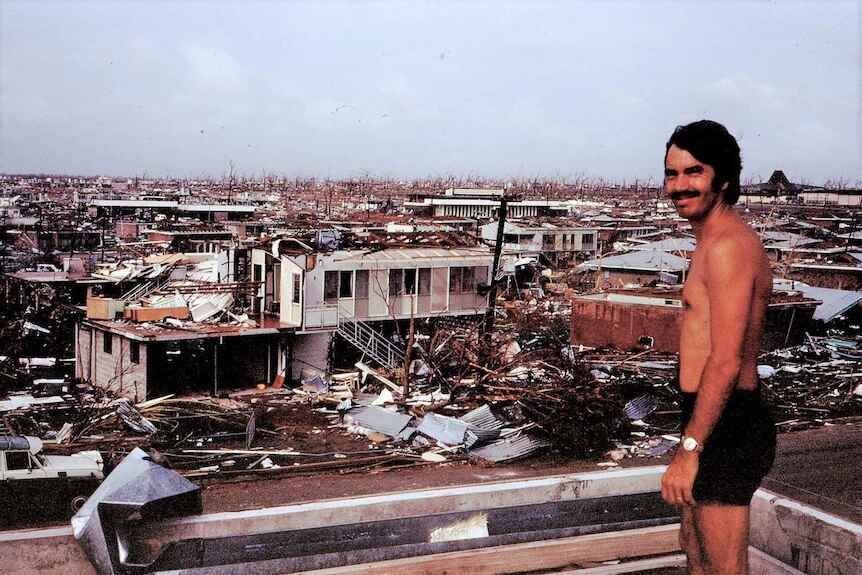
On Christmas Eve 1974, Darwin was effectively wiped off the map. Cyclone Tracy, a compact but ferocious storm, tore through the tropical capital with wind gusts exceeding 217 km/h. By the morning of December 25, the city lay in ruins. What followed was one of the greatest logistical and engineering challenges in Australian history.
Category 4 status at landfall, with pressure dropping to 950 hectopascals.
Operation Navy Help
The immediate response was maritime. Within hours of the storm's passage, the Royal Australian Navy launched 'Operation Navy Help'. HMS Melbourne and several other vessels were dispatched with medical supplies, engineering equipment, and fresh water. The sailors worked tirelessly alongside local survivors to clear the main thoroughfares of debris that had rendered the city impassable.
The Great Airlift
"The airport was a scene of controlled chaos. People were waiting in the heat, holding what little they had left in plastic bags. We flew them out by the thousands, every plane that could fly was in the air."
— Captain Robert Miller, RAAF (Ret.)
The Darwin Reconstruction Commission
In early 1975, the Federal Government established the Darwin Reconstruction Commission (DRC). Their mandate was simple but Herculean: rebuild a city that could withstand the next 'Tracy'. Led by Sir John Knight, the commission oversaw the planning of new suburbs and the enforcement of radical new building standards.
A Legacy of Strength: New Building Codes
The most enduring legacy of the Tracy aftermath was the revolution in structural engineering. It was discovered that most homes failed because of poor connection points between roofs and walls. This led to the creation of the Australian Wind Code, arguably the strictest in the world. Today, every house in Australia's cyclone-prone north is built to withstand forces that would have leveled Darwin in 1974.