The Threat: Ember Attack
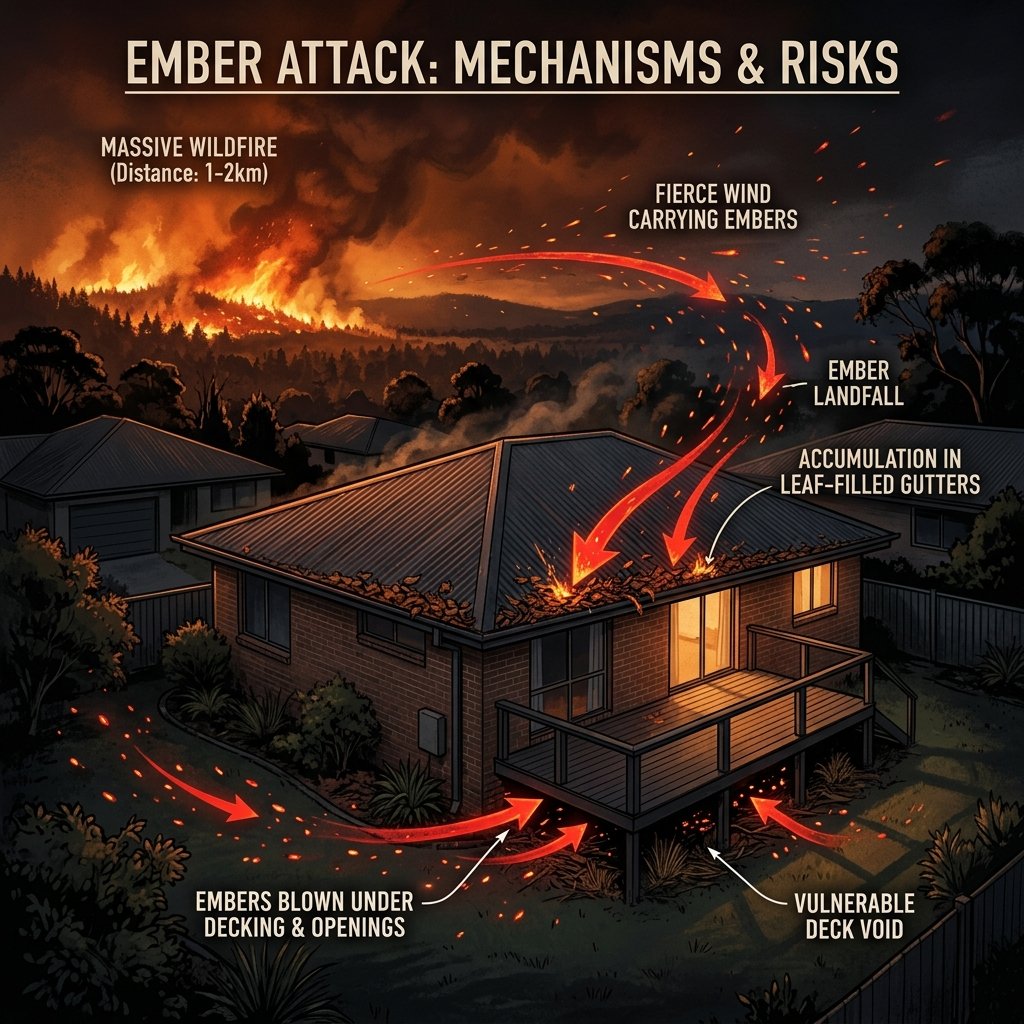
Most people think homes burn down because a giant wall of flame hits them. In reality, over 80% of homes destroyed in bushfires are lost to Ember Attack.
Embers are burning pieces of bark and leaves carried by strong winds. They can travel several kilometres ahead of the actual fire front. They land in gutters filled with dry leaves, blow under doorways, or get sucked into air vents, starting fires from the inside out.
This is why cleaning your gutters and clearing the "fuel load" (dry vegetation) away from your home is the most important preventative step you can take.
Decoding Emergency Alerts
During a fire, emergency services use a strict three-level warning system on apps like Fires Near Me. Knowing exactly what these mean could save your life.
Advice
A fire has started. There is no immediate danger. Stay up to date in case the situation changes.
Watch and Act
There is a heightened level of threat. Conditions are changing and you need to start taking action now to protect your life and your family.
Emergency Warning
You are in immediate danger. You must take action immediately as the fire is threatening your location.
Bushfire Survival Guide
Follow these steps if a fire is approaching your home.
Monitor alerts early
Have the *Fires Near Me* app open and set to your area before danger season starts.
Decide your trigger
Know in advance *at which alert level* you will leave — don't decide under pressure.
Grab your go-bag
Documents, medication, water, and radio. Should take under 5 minutes to grab your go-bag.
Leave via planned route
Tell someone where you are going. Avoid dirt roads that may be blocked.
If you cannot leave
Move to fire-resistant room, seal gaps with wet towels, lie flat, call 000.
edit_document Your Family Fire Plan
Fire agencies agree: leaving it to the last minute is the deadliest decision you can make. Every family living near bushland needs a written 5-minute plan.
- check_box When will you leave? (e.g., "We leave the night before an Extreme fire danger day.")
- check_box Where will you go? (A relative's house in the city, or a local shopping mall.)
- check_box What will you take? (Important documents, medications, pets, and a battery radio.)
What NOT to do
-
close
Don't rely entirely on mains water
If the power goes out, electric water pumps will fail, and town water pressure often drops to zero as firefighters tap into the mains.
-
close
Don't wait and see
"Half-measures" are dangerous. Waiting to see the smoke before leaving usually means the roads are already blocked by fallen trees or poor visibility.
-
close
Don't shelter in a pool or dam
The radiant heat from a fire is intense enough to boil the top layer of water in a pool. The smoke passing overhead is also toxic and deadly.
Check Your Understanding
Select the best answer for each question. Can you get all four right?
1. What is the #1 way homes are destroyed during a bushfire?
2. A "Watch and Act" alert means you should…
3. Why is leaving early safer than waiting until you can see the smoke?
4. Why is it dangerous to shelter in a backyard swimming pool during a bushfire?