Saturday, February 7, 2009, began with an eerie stillness across Victoria. The Bureau of Meteorology had predicted the "hottest, most dangerous day in the state's history," and they were painfully correct. The state was a tinderbox, waiting for a single spark.
The Perfect Storm of Conditions
Black Saturday was the result of a catastrophic collision of extreme weather factors. A decade-long drought had left the forests completely dry. Then, a severe heatwave baked the state for a week. On the day itself, temperatures in Melbourne peaked at a blistering 46.4°C, while relative humidity plummeted below 10%.
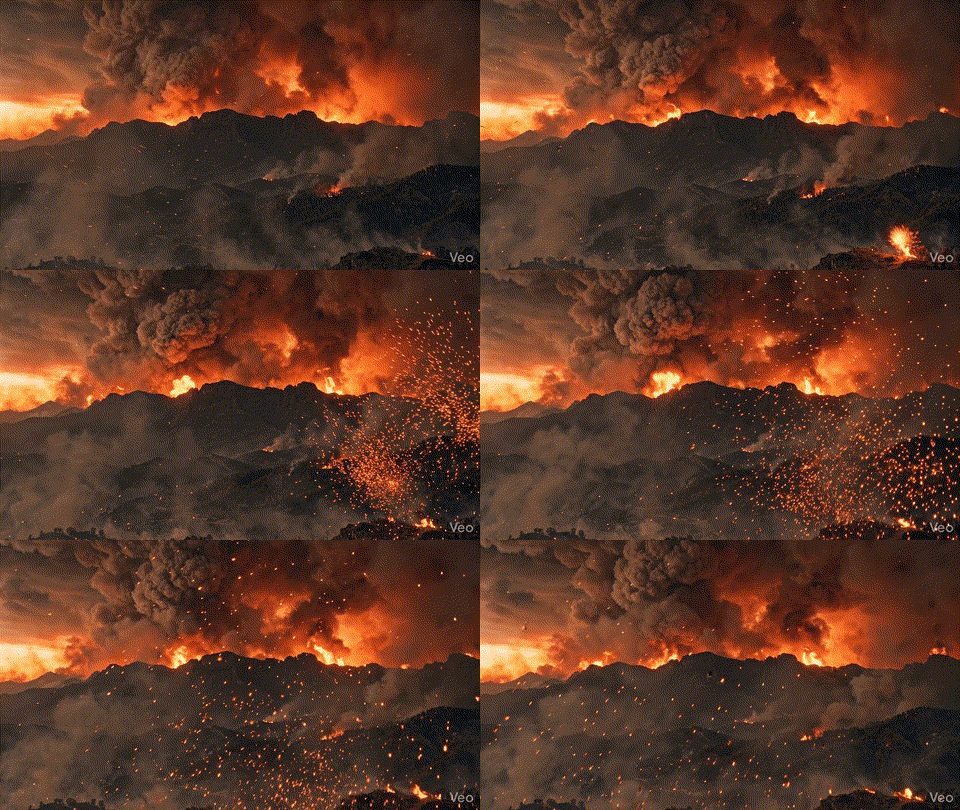
Added to the heat and dryness were fierce north-westerly winds blowing at over 100 km/h. When the fires began, they moved with a ferocity rarely seen in modern history. The fires weren't just burning along the ground; they became "crown fires" racing through the upper canopies of giant eucalyptus trees, creating intense radiant heat that made survival near impossible in the open.
A Deadly Change in the Wind
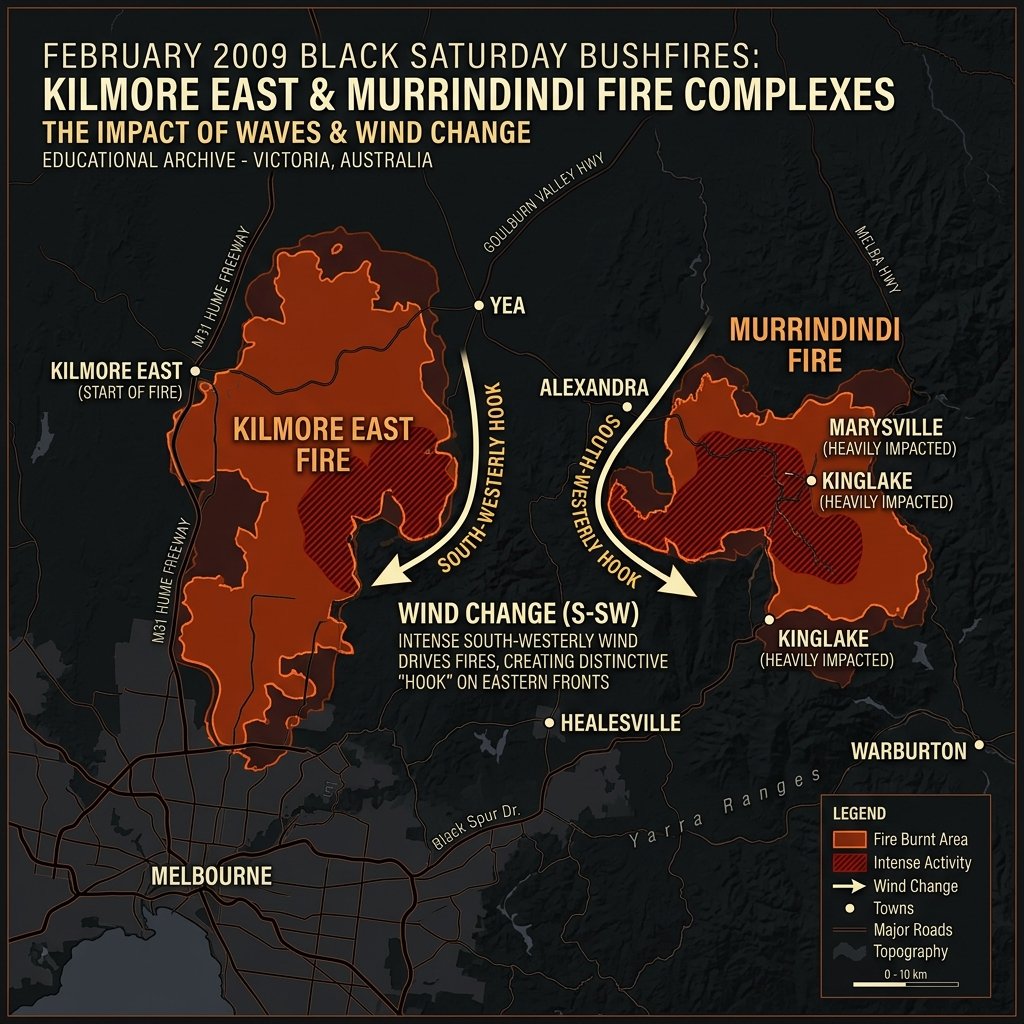
The most dangerous moment of the day came in the late afternoon. A strong south-westerly wind change swept across the state. While it brought slightly cooler air, it also drastically shifted the wind's direction by almost 90 degrees.
This turned the long hundreds-of-kilometres-wide side flanks of existing fires into massive, unstoppable new fire-fronts. Communities that thought they were safe were suddenly caught directly in the line of a towering wall of flame, with very little warning.
record_voice_over Survivor Account
"It sounded like a fleet of jumbo jets roaring directly overhead. The sky turned entirely black by 3 PM, and embers rained down like a glowing snowstorm. We had no choice but to shelter."
— Resident of Kinglake
Impact on Communities
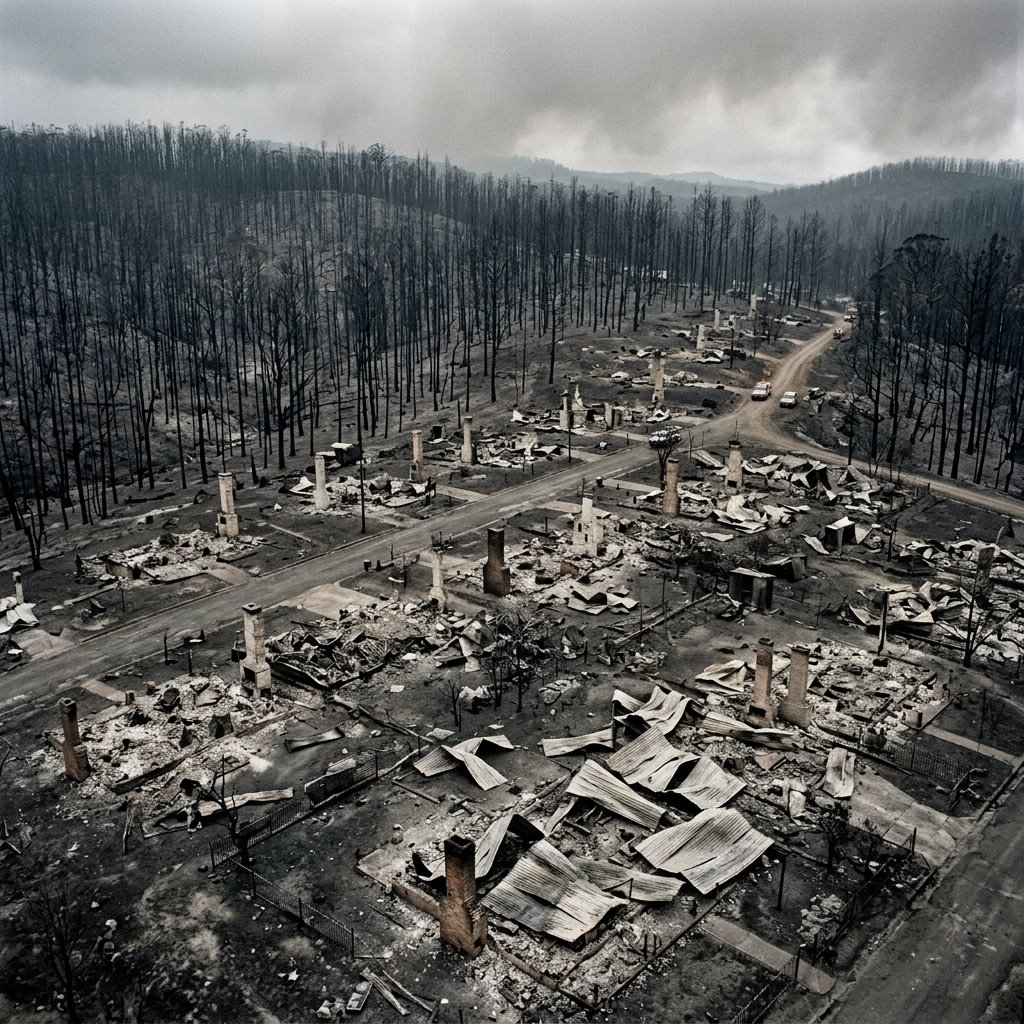
The speed and heat of the fires overwhelmed entire towns. Kinglake and Marysville were almost completely destroyed, with Marysville losing roughly 90% of its buildings. Residents who stayed to defend their homes found their fire pumps melting and their preparations inadequate for the ferocious radiant heat.