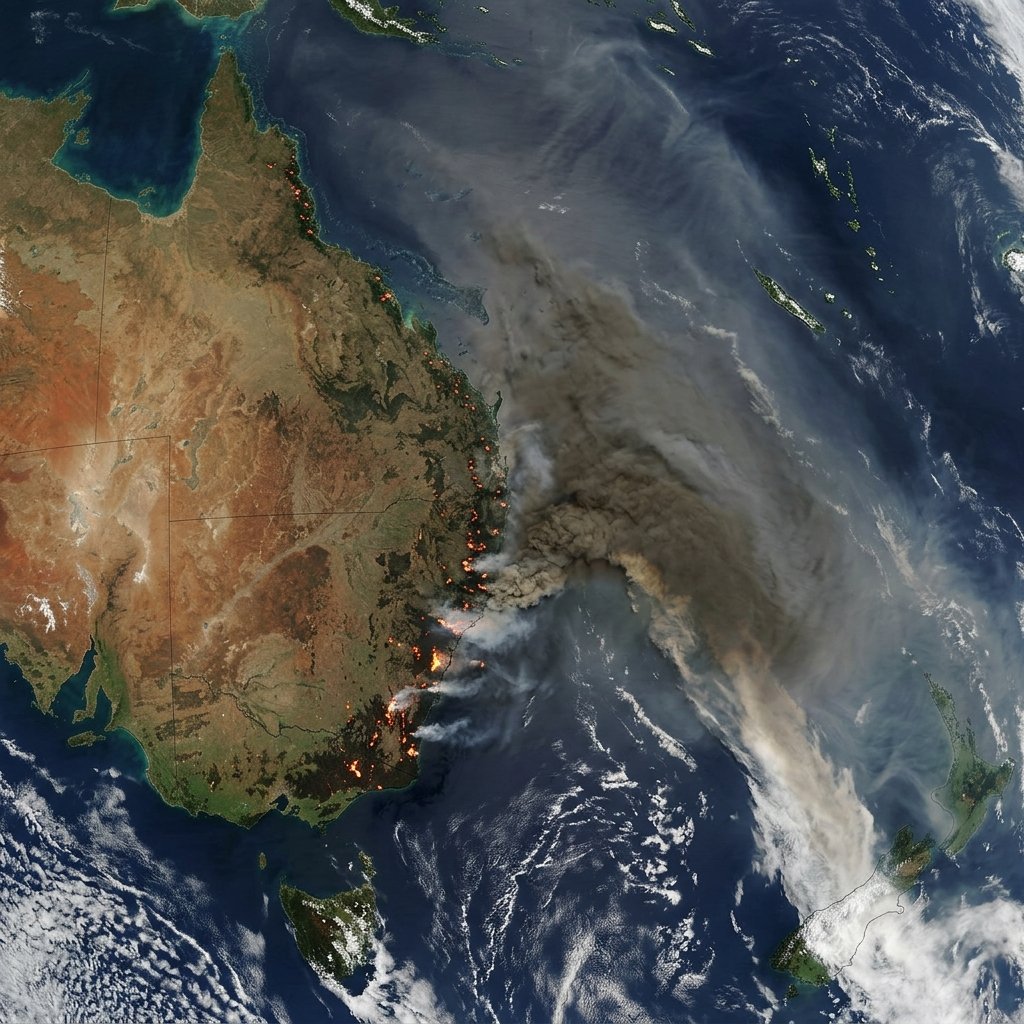
Black Summer Satellite View
Catastrophe • 2019-2020

Black Summer

The season of "Mega-Fires" that scorched 24 million hectares.

The 2019-2020 bushfire season, widely known as Black Summer, was unlike anything Australia had ever experienced in recorded history. It wasn't defined by a single day of tragedy, but by months of relentless, massive fires that spanned across the entire eastern coast of the continent.

A Planet on Fire

The conditions that led to Black Summer were brewing for nearly three years. A persistent drought had left the Australian bush exceptionally dry. This was compounded by a climate pattern known as a Positive Indian Ocean Dipole, creating intensely hot and dry conditions.

The scale of Black Summer was truly global. The fires generated so much intense heat that they created their own weather systems, forming massive fire-induced thunderstorms known as pyrocumulonimbus clouds. Smoke from the fires drifted across the Tasman Sea, turned glaciers in New Zealand brown with ash, and eventually circled the entire planet. For weeks, major cities like Sydney, Melbourne, and Canberra were choked in hazardous smoke, with air quality dropping to some of the worst levels in the world.

Impact on Communities

Unlike localised bushfires, the Black Summer fires joined together to create "mega-fires" that stretched over hundreds of kilometres. They burned through remote wilderness, farmland, and directly threatened heavily populated coastal tourist towns during the peak summer holiday season.

"

record_voice_over Survivor Account

"The sky turned completely blood-red at 10 AM. Then it went pitch black. We couldn't leave by road because the highway was closed in both directions. We just grabbed blankets and huddled on the sand, listening to the gas bottles exploding in town."

— Resident forced to shelter on Mallacoota beach, NYE 2019

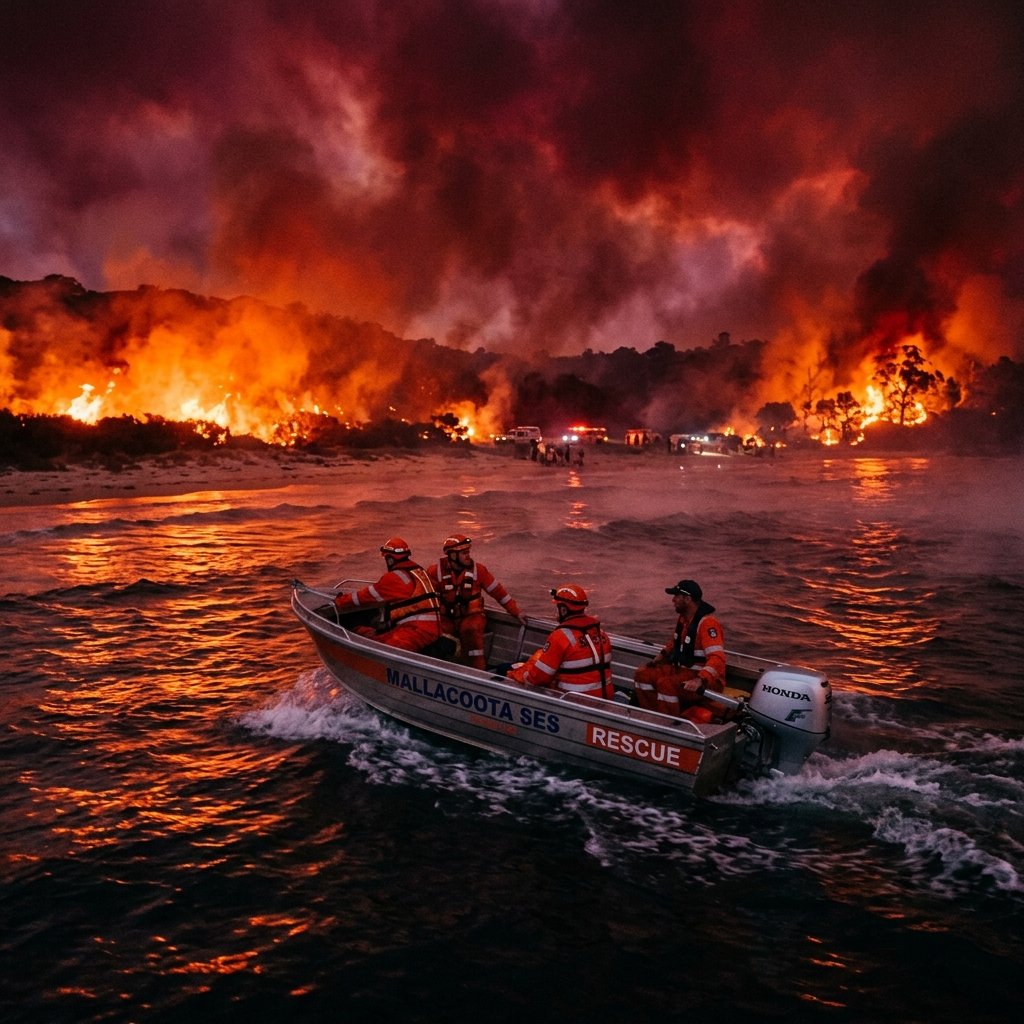
One of the most defining images of the season was from New Year's Eve in Mallacoota (Victoria) and Batemans Bay (NSW). With highways cut off by walls of flame, thousands of residents and holidaymakers were forced to evacuate to the water's edge. Some even had to jump into boats to stay safe from the intense radiant heat.
A Season of Crisis

The months-long disaster gripped the nation and the world.

Mallacoota Coast during Black Summer
Coastal Evacuation Mallacoota residents wait for military evacuation by sea.
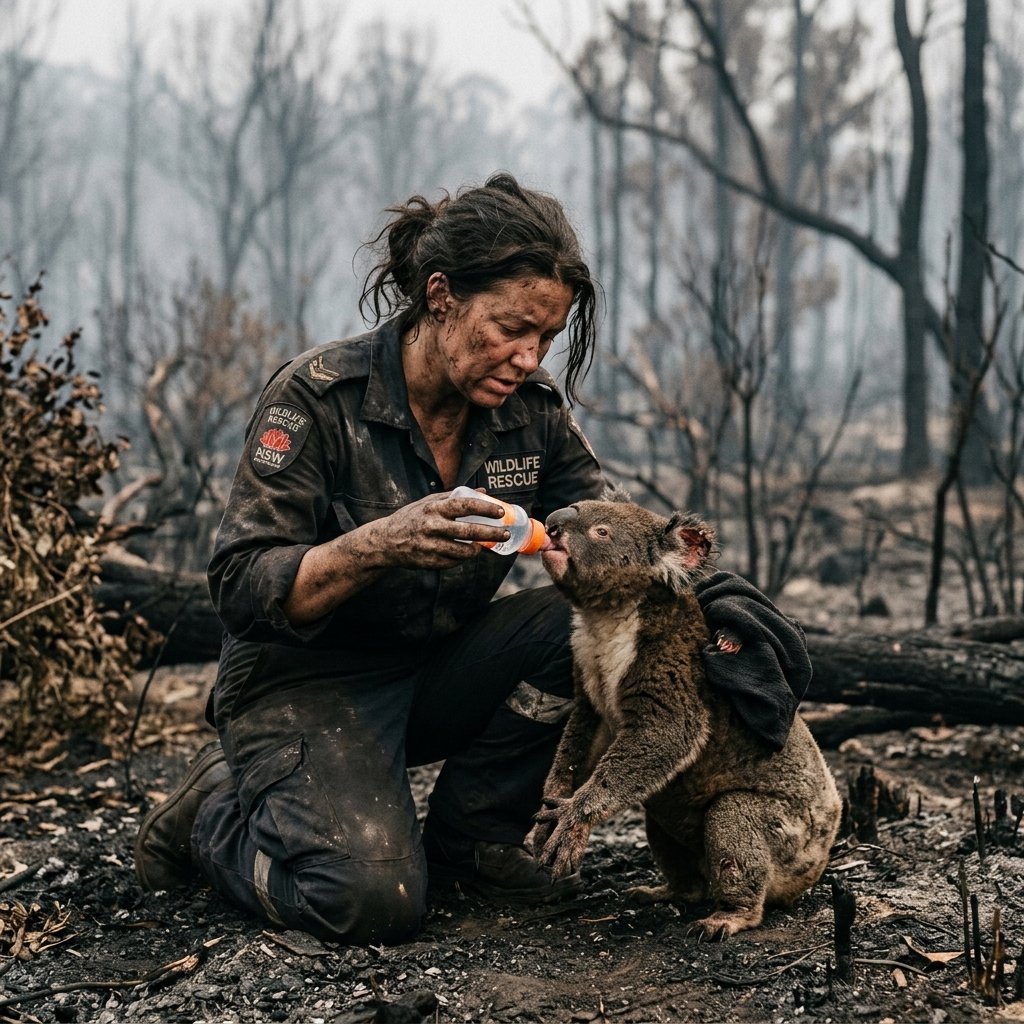
Koala rescue during Black Summer
Environmental Tragedy The fires pushed some species closer to the brink of local extinction.
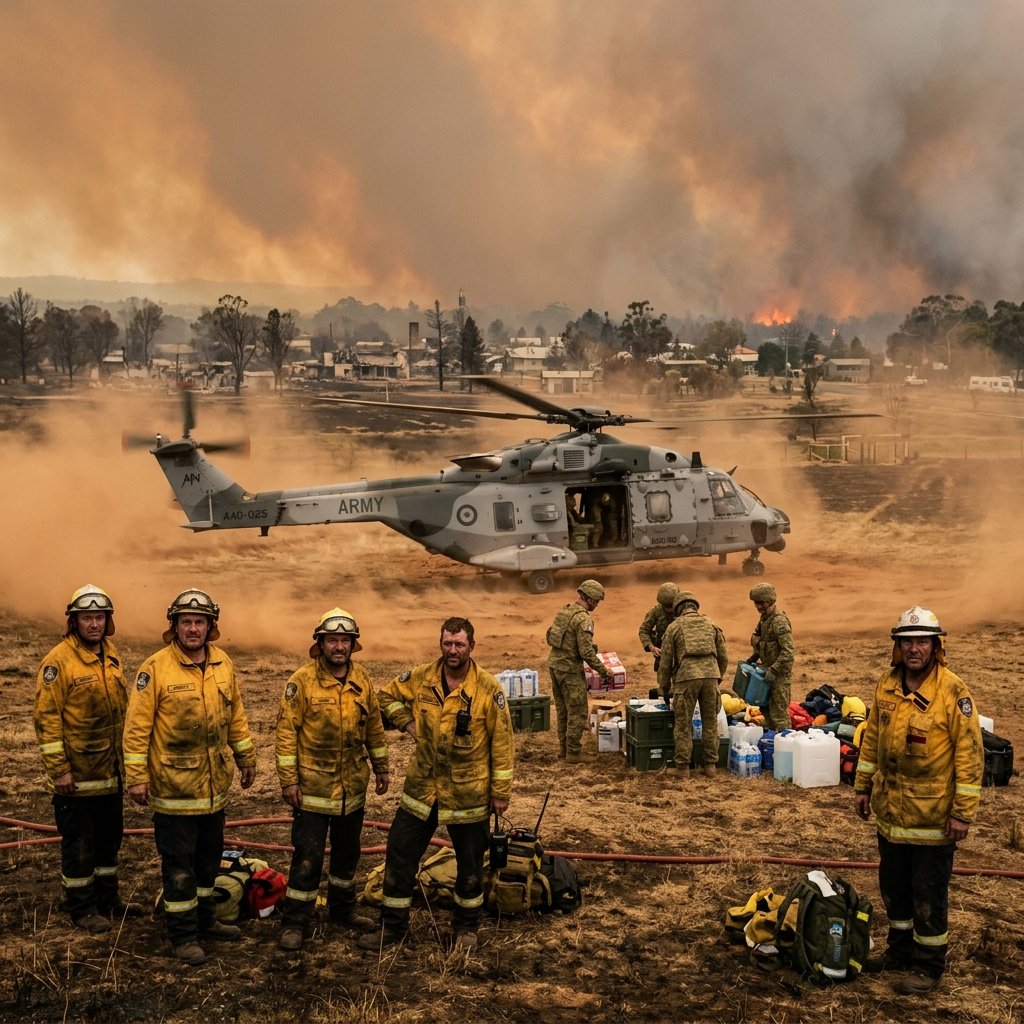
ADF Operation Bushfire Assist
The Military Response Operation Bushfire Assist mobilised 6,500 ADF personnel.

The Global Response

For students, it was the first time they had seen fires so large they couldn't be fought with traditional means; instead, firefighters focused entirely on protecting property and lives. The Australian Defence Force launched "Operation Bushfire Assist," sending ships to evacuate coastal towns and using helicopters to drop supplies.

Because the fires burned for months, local volunteers were exhausted. The world responded. Firefighting task forces flew in from New Zealand, the United States, and Canada, bringing expertise and vital aerial support to give local crews a rest.

Ecological Toll

Beyond the human impact, the ecological cost was staggering. Scientists estimated that nearly 3 billion animals—mammals, reptiles, birds, and frogs—were killed or displaced by the fires. The destruction of crucial habitats, like those for Koalas and the Kangaroo Island Dunnart, sparked an enormous global fundraising effort for animal rescue and conservation.

What Changed?

The Black Summer Royal Commission was called to investigate the disaster. One of the biggest changes to come from the inquiry was a renewed focus on Indigenous "Cultural Burning." For thousands of years, First Nations Australians used small, cool burns to manage the forest floor. There is now a strong push to combine this ancient wisdom with modern technology to prevent future mega-fires.

The inquiry also led to the development of a national, unified air quality tracking system and stronger national coordination for emergency warnings so that Australians traveling across state lines wouldn't be confused by different alert apps.