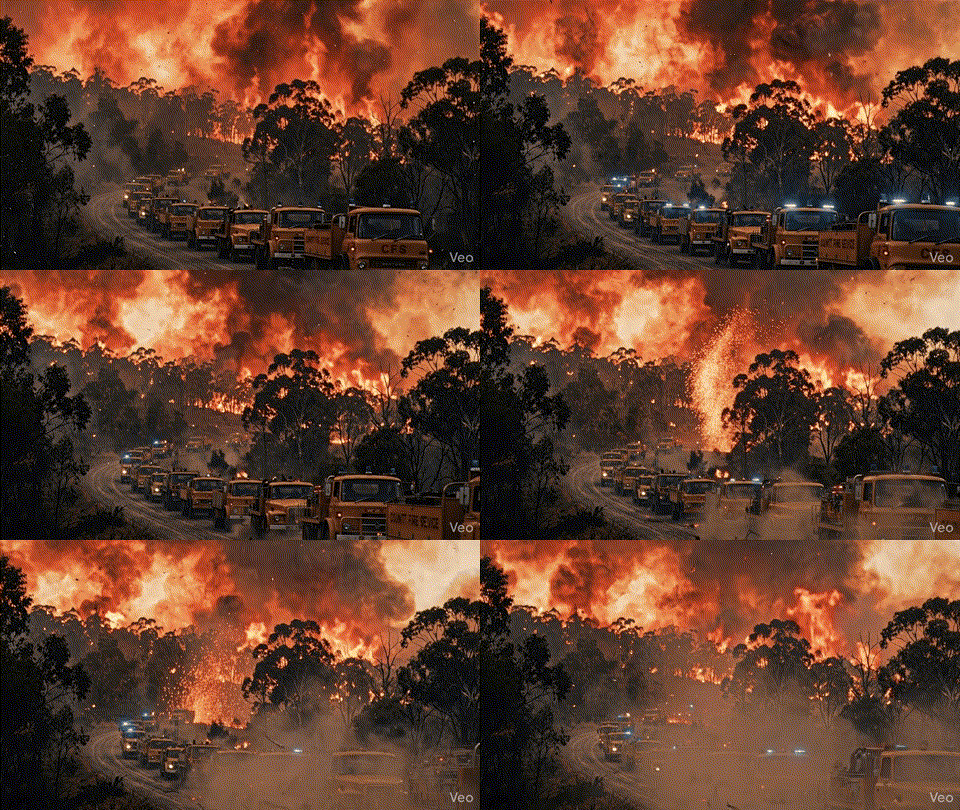
Fire trucks on a dirt road with a forest fire burning in the distance — Ash Wednesday 1983
Catastrophe • 1983

Ash Wednesday

The massive firestorm that swept across South Australia and Victoria.

The Ash Wednesday bushfires of February 16, 1983, remain deeply etched in the memory of a generation of Australians. Unlike many disasters that affect a single region, this firestorm stretched its devastating reach across two states simultaneously.

The Deep Drought

The tragedy didn't begin on that Wednesday; it had been building for months. An intense El Niño weather pattern meant the winter and spring of 1982 were incredibly dry. By February 1983, parts of Victoria and South Australia were experiencing their lowest rainfall since European settlement.

The soil was so parched and the forests so dry that they were effectively one giant fuel load. On the day itself, temperatures soared to 43°C in Adelaide and Melbourne, creating the perfect recipe for a catastrophe.

Impact on Communities

The ferocity of the blaze caught both residents and firefighters completely off guard. In Victoria, holiday towns along the Great Ocean Road and communities nestled in Mount Macedon were rapidly overrun. In South Australia, the beautiful Adelaide Hills and the state's south-east faced terrifying walls of flame. People had little to no warning before their towns were surrounded.

"

record_voice_over Survivor Account

"It was pitch black by 3 PM. You couldn't see your hand in front of your face through the smoke, but the roar coming up the valley was deafening. It sounded like a freight train made of fire."

— Volunteer Firefighter, Mt Macedon

The most significant killer of the day was the weather shift. As a cold front moved across from the Southern Ocean in the evening, the north-westerly winds pushing the fire suddenly shifted 90 degrees. This widened the front from kilometres to tens of kilometres almost instantly.
A Two-State Emergency

The scale of the disaster overwhelmed the technology and resources of the 1980s.

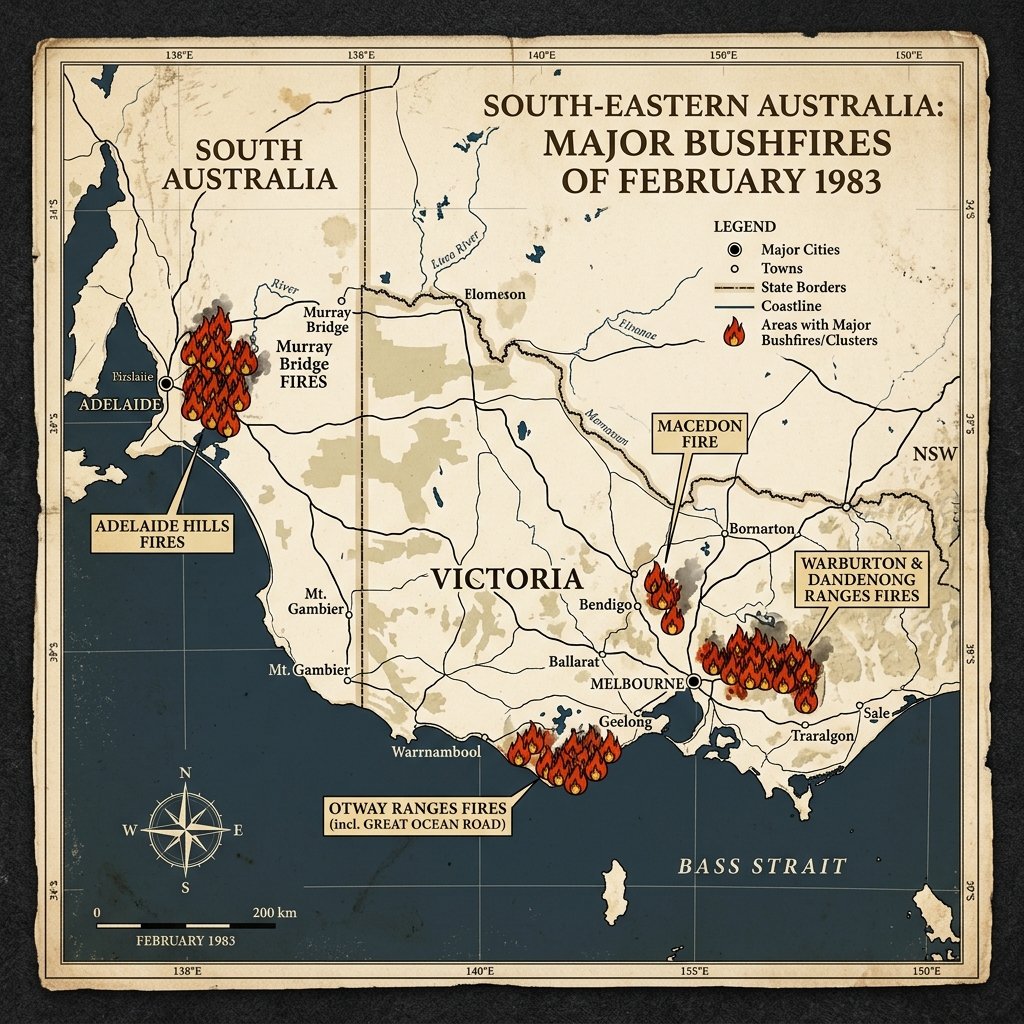
Map of 1983 Ash Wednesday Fires
Scale of Destruction Over 100 fires broke out across SA and VIC on a single day.
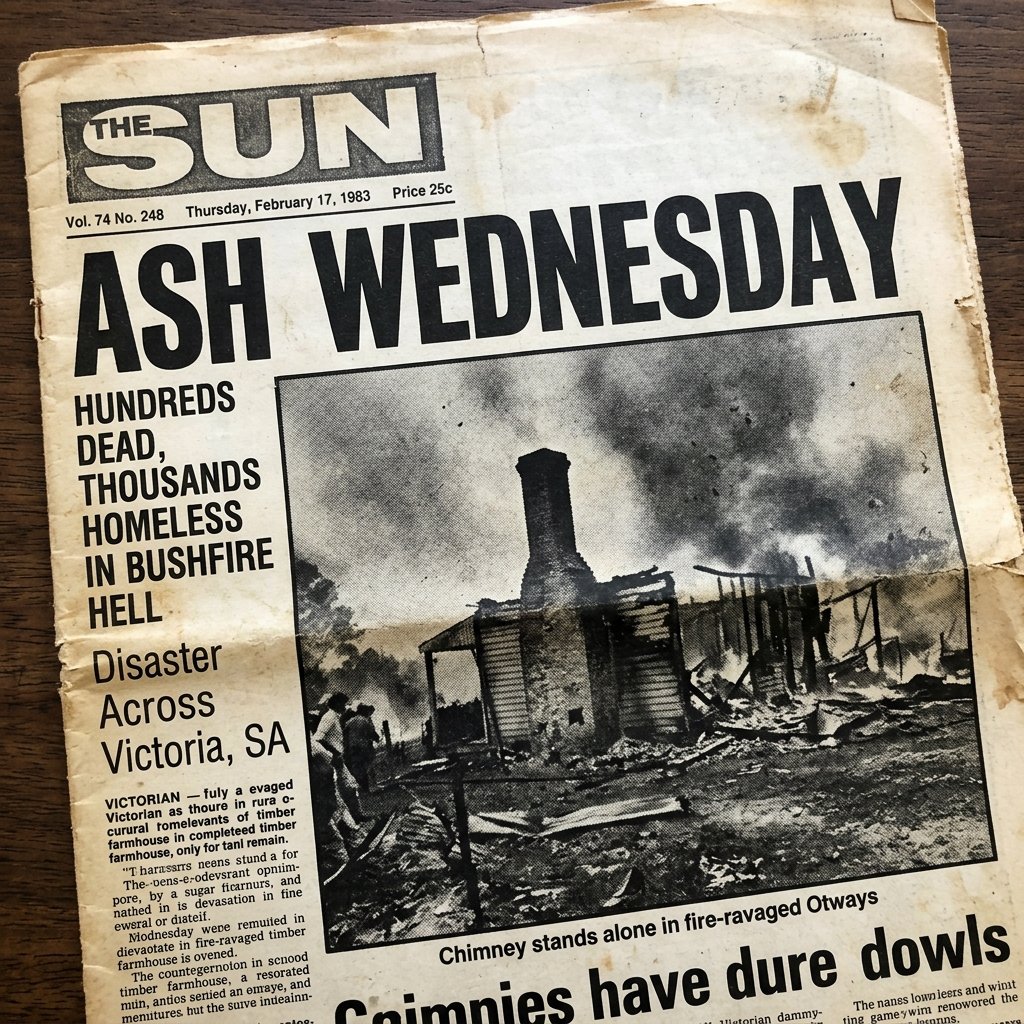
Ash Wednesday News Archive
National Shock The event dominated national news for consecutive weeks.
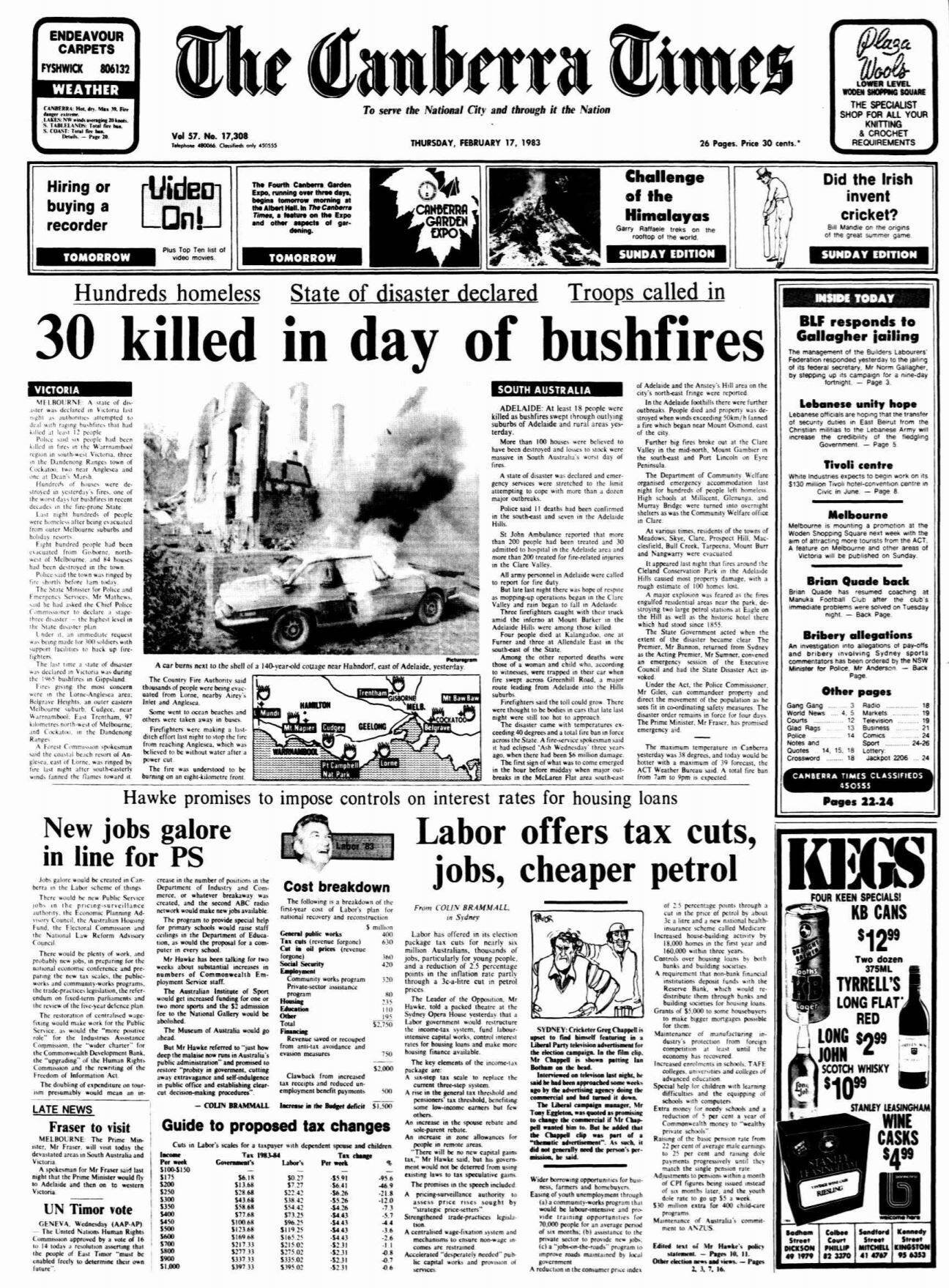
Historical Ash Wednesday News Article
Media Coverage Public record of the widespread firestorms and emergency response.
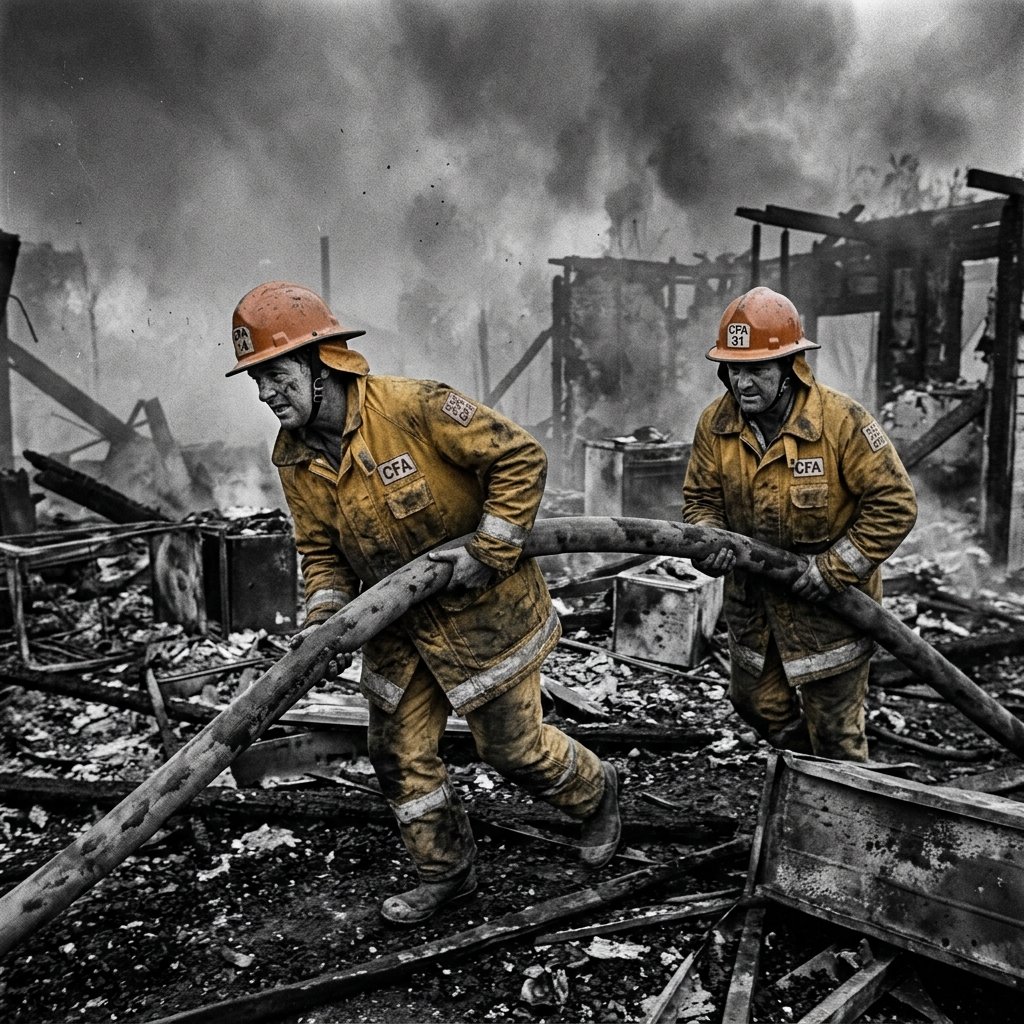
Firefighters in 1983
The Old Guard Over 130,000 personnel battled the fires with limited modern communication.

The Response and Aftermath

Battling the fires pushed agencies to the breaking point. At the time, emergency services from different regions, and different states, used entirely different radio systems. Crews from South Australia driving to help in Victoria literally could not talk to their counterparts.

The aftermath was a period of intense national mourning. The loss of 75 lives, including over a dozen firefighters, was a devastating blow. Charity drives and rebuilding funds raised millions to help communities completely rebuild from the ashes.

What Changed?

Ash Wednesday completely rewrote the rulebook for firefighting in Australia. It exposed major flaws in how agencies communicated.

As a direct result, Australia developed standardised emergency radio networks. Fire hoses and hydrants, which previously didn't fit together if they were from different towns, were standardised nationally so any truck could connect to any water source. Furthermore, mapping and early-alert systems were vastly improved to ensure residents got warnings earlier.