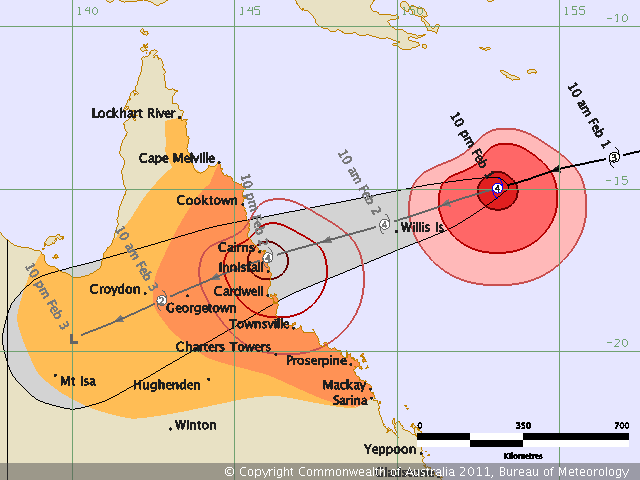
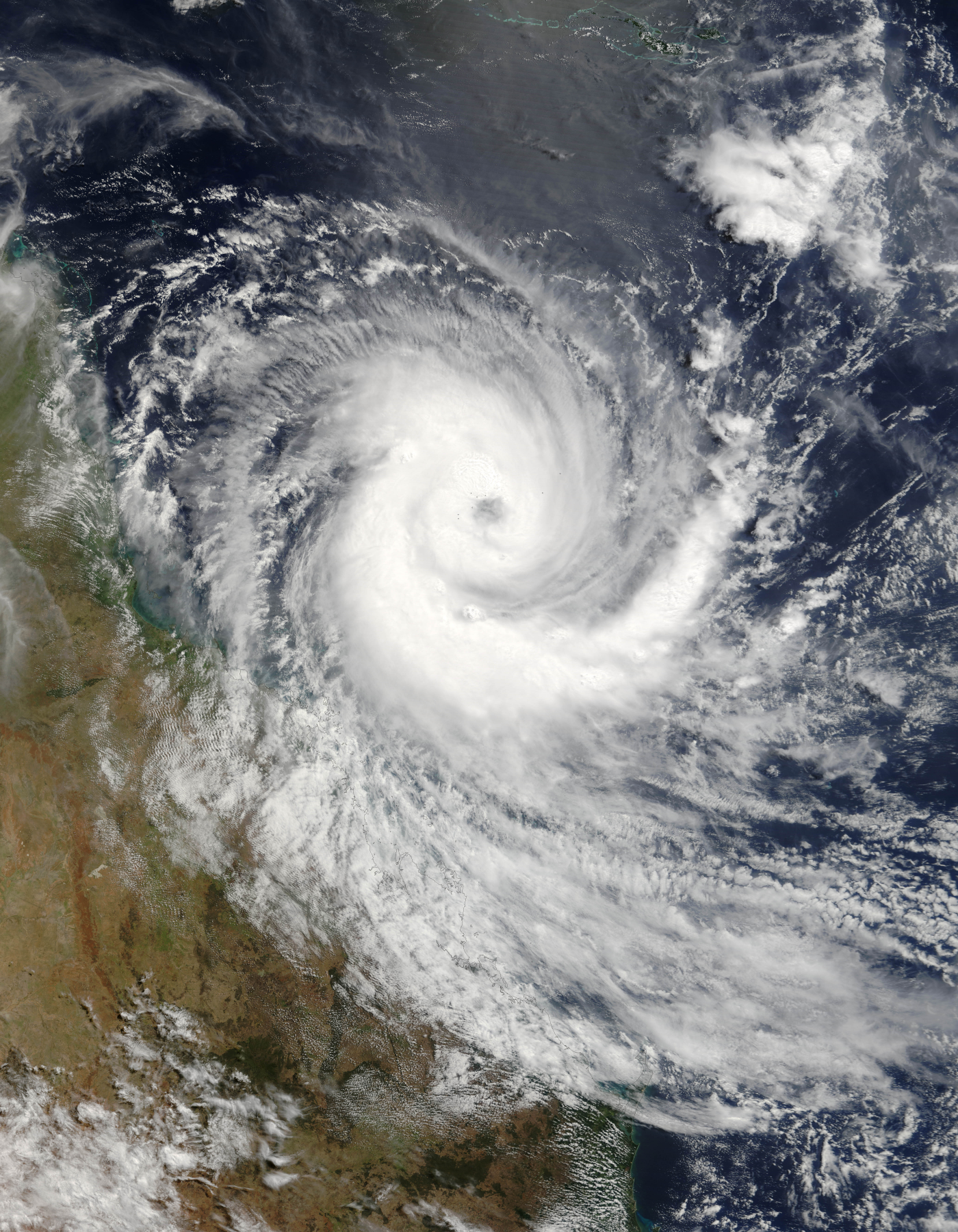
Dawn broke slowly over the Wet Tropics on 20 March 2006 — or rather, it didn't. By the time first light should have filtered through the ancient rainforest canopy above Innisfail, the sky had already turned a sickly green-grey. Cyclone Larry had been tracking west for three days through the Coral Sea, tightening its spiral with each passing hour until it had become one of the most intense tropical cyclones to approach the Australian mainland in a generation. By 6:28 in the morning, Far North Queensland's banana belt was about to be erased.
The residents of the Innisfail district had been warned. In the 48 hours prior, the Bureau of Meteorology issued escalating warnings across a coastal strip stretching from Cairns to Cardwell. Schools closed, shelves emptied, and the characteristic rhythm of Innisfail's daily life — a sugar town that still wore its art-deco heritage proudly from the rebuilding after the 1918 cyclone — fell into an anxious quiet. Families moved vehicles to high ground, strapped roofing iron, and gathered in hallways and bathrooms with mattresses against the louvres.
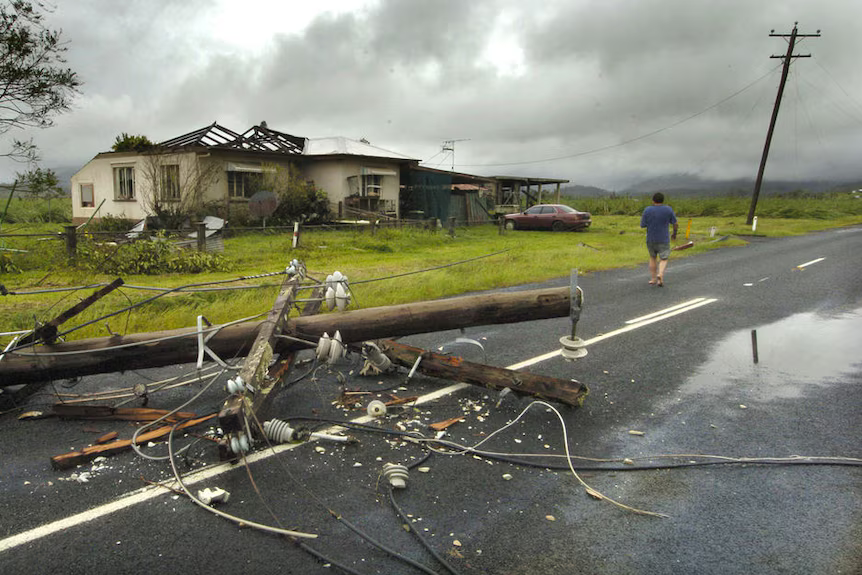
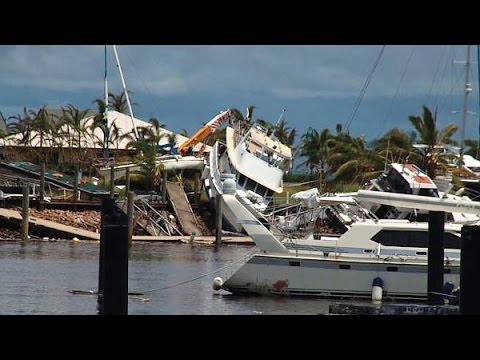
At exactly 6:28 am, Larry's eye crossed the coast between Babinda and Innisfail as a Category 5 tropical cyclone carrying sustained winds of 205 km/h and gusts exceeding 240 km/h. Trees that had stood for a century were stripped bare within minutes. Roof sheets became projectiles. The banana growing region of the Atherton Tablelands — responsible for roughly 80 per cent of Australia's entire banana production — was obliterated before most of the country had finished breakfast.
"The bananas were just gone. The cane was gone. Fifty years of farming, obliterated before breakfast. But we were still standing — and that was all that mattered.
A Miraculous Zero
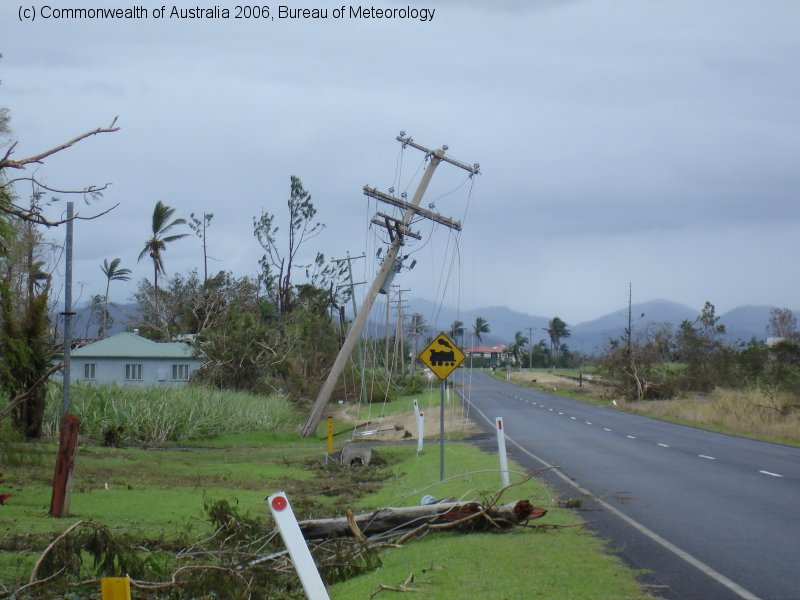
Among the most remarkable aspects of Cyclone Larry's history is what did not happen. Despite the ferocity of the storm — winds that snapped power poles like matchsticks and stripped the bark from trees — there were no direct fatalities. The zero death toll stands as an extraordinary testament to the effectiveness of Australia's emergency management systems and the community's willingness to act on warnings.
Preparation had begun two days in advance. Emergency managers coordinated evacuations across the coastal strip, and thousands relocated inland or to cyclone-rated shelters. Those who remained in their homes sheltered in internal rooms, away from windows and glass. Post-cyclone surveys found that the structural choices made by residents — bathrooms, hallways, under stairwells — saved countless lives in buildings that were otherwise destroyed above them.
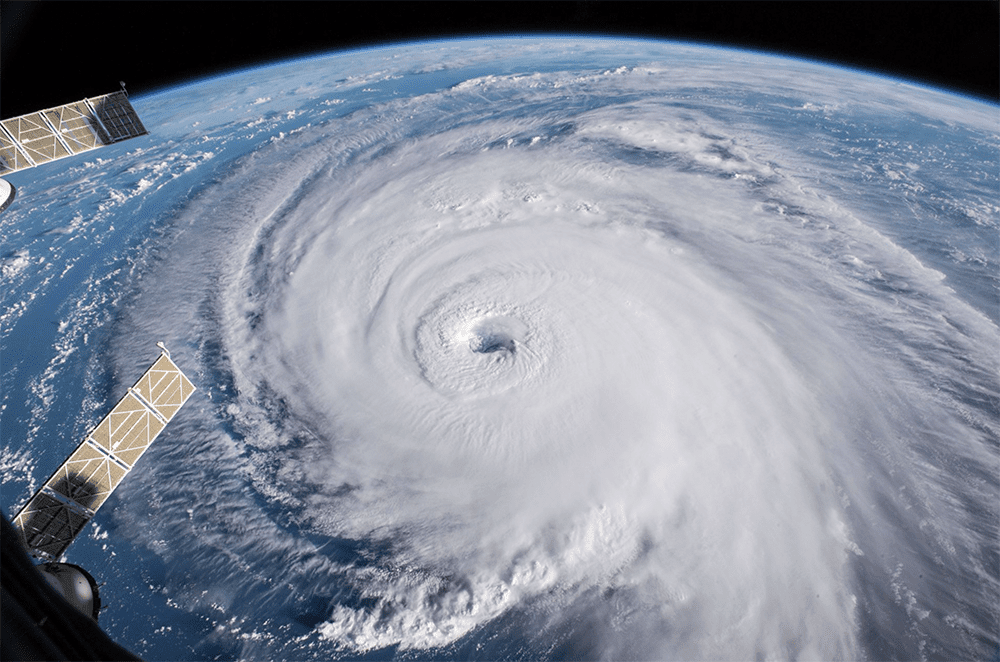
The Banana Belt Broken
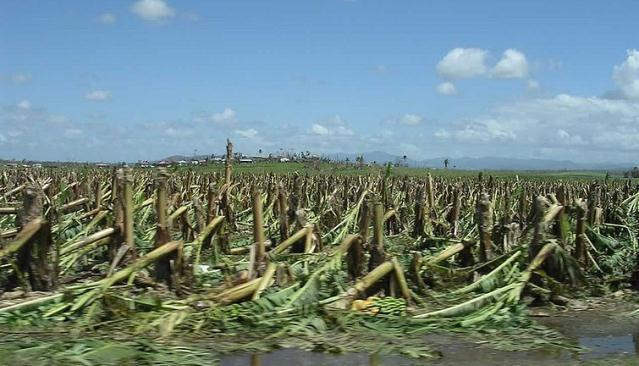
The agricultural catastrophe was the defining legacy of Larry's passage. The Wet Tropics region produces the overwhelming majority of Australia's banana crop, and the cyclone eliminated nearly all of it in a single morning. Farm after farm across the Innisfail flats and the Atherton Tablelands lay in ruin — uprooted plants, destroyed irrigation infrastructure, shattered packing sheds, and machinery buried under debris.
In the weeks that followed, banana prices across Australia surged to historic highs — more than six dollars per kilogram in some supermarkets. The shortfall took nearly two years to fully recover. Beyond bananas, Larry devastated the sugar cane fields around Innisfail, levelled timber plantations, and struck the hinterland tourism industry at the height of its season. Total economic damage was estimated at A$1.5 billion.
Innisfail and the Recovery
Innisfail, whose exceptional collection of Art Deco buildings was erected after a devastating 1918 cyclone, bore the full brunt of the storm. Roofs were stripped, walls collapsed, and heritage streetscapes suffered extensive damage. Yet the town's response was immediate and extraordinary. Within hours, the community had begun clearing roads and checking on neighbours.
In the days that followed, thousands of Australian Defence Force personnel, emergency services volunteers, and civilian tradespeople converged on the region. Power was progressively restored, roads cleared, and temporary housing established. The federal government committed over $150 million in immediate disaster relief. The recovery, while difficult, was organised and sustained — a demonstration of what modern emergency management, when properly resourced, is capable of.