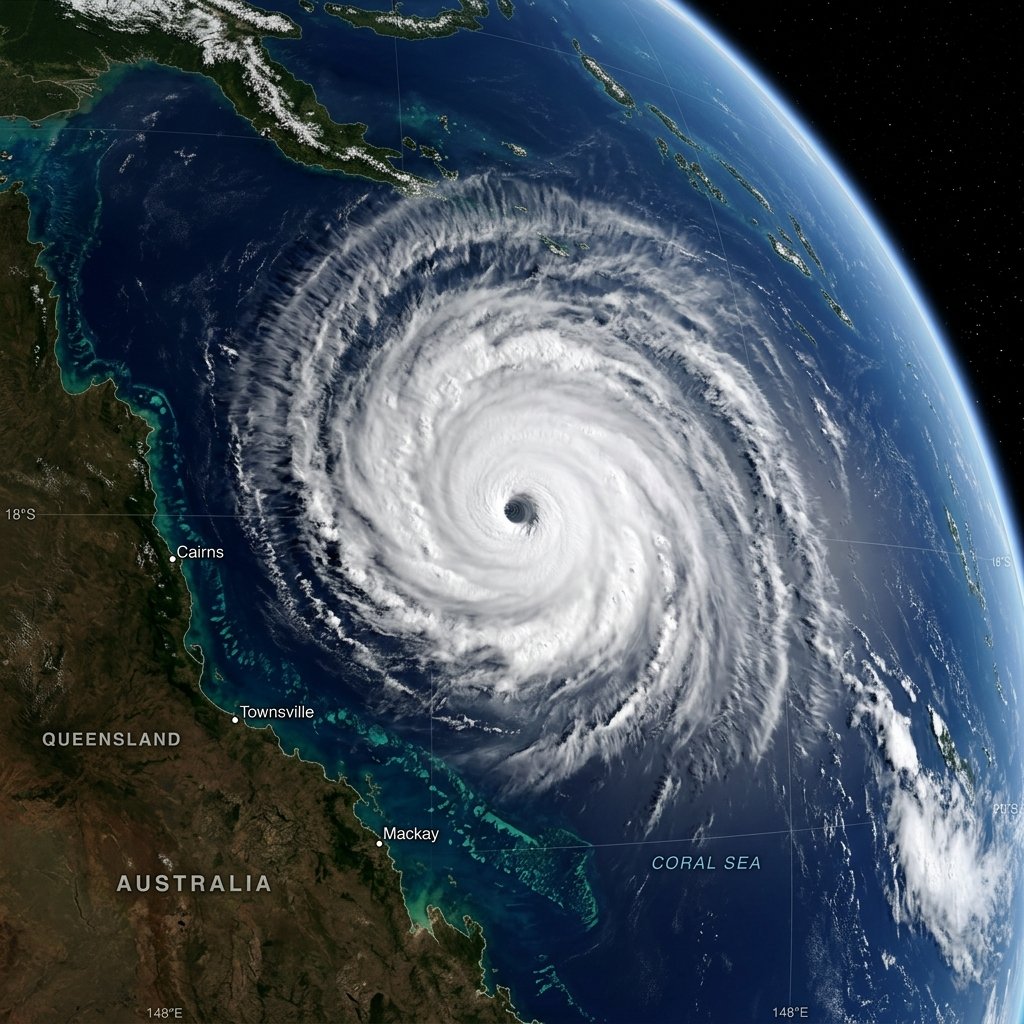
A photo of Cyclone Yasi from space. It is a very big spinning Category 5 storm coming at Queensland.
Disaster • 2011

Cyclone Yasi

The night it got dark in the rainforest — and this very special forest went quiet.

J
By Dr. Joshua Falken
8 April 202613 min read

On the night of 1 February 2011, people in Far North Queensland had packed their things. They got in their cars. They drove far from the coast. The weather office had said the same thing for two days: Cyclone Yasi was going to be the biggest storm to hit Queensland in a very long time. The warnings worked and helped keep people safe. But the land was still there to take the full hit.

By the middle of the night, the outer parts of Yasi were tearing up the coast at Mission Beach. The towns of Innisfail, Cardwell, Tully, and Mission Beach were empty. Most people had gone. When the storm hit, the land was all alone in the dark.

At about midnight, the eye of Yasi crossed the coast between Mission Beach and Cardwell. It was a Category 5 storm. The air pressure in the middle was 929 hPa. That made it the strongest storm to hit Queensland since 1918. The winds were 285 km/h. The gusts of wind were more than 300 km/h. The winds smashed the coast. A big wave of 5 metres came onto the land. This big, old rainforest — one of the oldest in the world — got the worst part of the storm.

We thought we understood these forests. They’re hundreds of millions of years old. But when we walked in after Yasi, it was like walking on another planet. The canopy was simply gone.

— Dr. Erin Vandermark, Wet Tropics Authority, February 2011

In easy words: We thought we knew this rainforest. It is very, very old. But when we walked in after Yasi, it looked like a whole new place. The top of the trees was gone.

A Storm That Broke Records

Yasi was not just a very strong storm. It was also a very, very big storm. At its strongest, the strong winds reached more than 650 km wide. That is wider than some whole countries. It was so big that both Cairns in the north and Townsville in the south got hit at the same time. It was bigger than all of the United Kingdom.
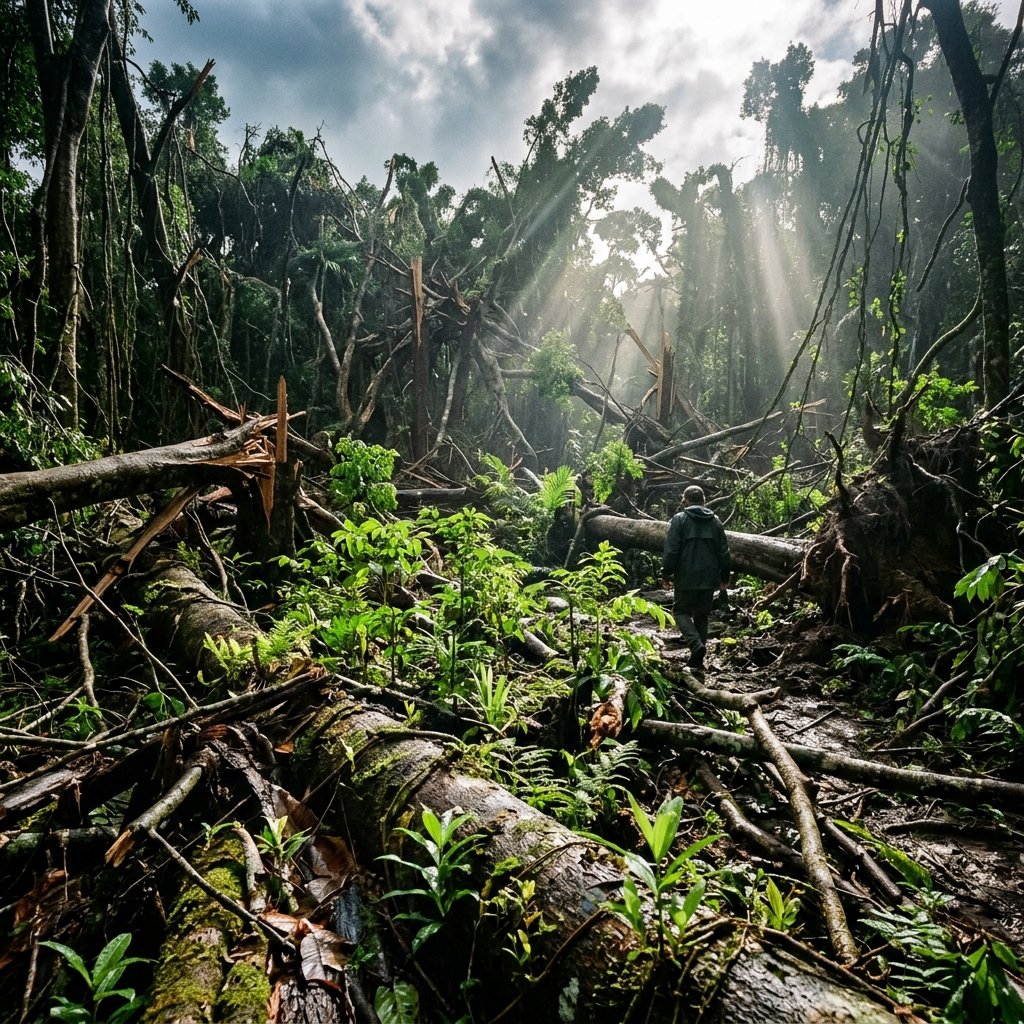
A broken rainforest after Cyclone Yasi — trees snapped, the tops of trees gone, small green plants growing back on the forest floor
The Tree Tops Are Gone The rainforest in the days after Yasi — very old trees are broken at the base. The sun hits the forest floor for the first time in 100 years.
Click to expand

The Big Move to Safety

About 175,000 people left their homes near the coast. Just one person died in the big wave. This shows what can happen when warnings are clear and people listen to them. Later, people worked out that if no one had left, hundreds of people might have died. Lots of houses were very badly broken.

The Farms Were Broken

Just five years before, Cyclone Larry had broken all the banana farms in this area. Then Yasi came and hit the same place. About 75 out of every 100 bananas in Australia were broken again. The sugar cane farms in Tully and Innisfail were smashed flat. The total cost of the damage was $3.6 billion. That was more than two times the cost of Larry.
parkImpact Story — Nature

The Special Rainforest in the Middle of the Storm

“I stepped into the forest two weeks later and I burst into tears. The trees I’d studied for fifteen years — gone. But then I looked closer. There were seedlings already. The forest was fighting back.”

— Dr. Sarah Laurance, Tropical Forests Research Centre, March 2011

In easy words: I went into the forest two weeks later. I cried. The trees I had looked at for 15 years were all gone. But then I looked more closely. There were tiny new baby plants already growing! The forest was coming back.

The Wet Tropics in Queensland is one of the oldest rainforests in the world. It has been there for a very, very long time. Back when the land was all one big piece, this forest was already here. More than 3,000 kinds of plants live here. So do 107 kinds of mammals. When Yasi hit this forest at 285 km/h, the tops of the trees were changed. It had taken millions of years for these trees to grow so tall.

Right after the storm, more than 90,000 hectares of this special forest were hurt. Some parts had lost lots of trees. Some parts had lost nearly all the trees. Big trees that had stood for hundreds of years were broken at the base. The floor of the forest is always dark. But now the sun could shine on it.

The Great Barrier Reef was also hit by Yasi. The big wave and the strong waves broke some of the coral. This was bad for the reef near the land. Rain made lots of water run off the land into the sea. The water had dirt, bits of wood, and things from farms in it. This made the sea water dirty. Coral needs clean water to live.

But the story of the rainforest after Yasi is a good one. The forest is very strong. After just a few weeks, new plants were growing fast. They filled up the holes in the tops of the trees. The forest knew how to fix itself. It had been through ice ages. It had been through many cyclones before. It would live through this one too.

lightbulb

Things to Learn: How Nature Gets Better After a Big Storm

Big storms show us how nature copes with trouble. This can help us look after our land before and after a storm.

  • check_circleWorld Heritage Areas are very special places. The whole world has said we must keep them safe. The Wet Tropics is one of the most special places for plants and animals. Lots of things here are not found anywhere else.
  • check_circleNature can fix itself. Old rainforests know how to come back from a storm. They have been doing it for millions of years. They are much stronger than houses and towns that people build.
  • check_circleThe Earth is getting hotter. Because of this, we see more big Category 4 and Category 5 storms. If big storms come too often, there might not be enough time for the forest to fix itself. Then the forest gets weaker and weaker.
  • check_circleThe reef can get sick. When coral is in trouble, it turns white. It loses the tiny plants that live on it. These tiny plants feed it. Storms and hot water make the reef sick. This is very bad for our reef.
After the Storm

A Broken Coast

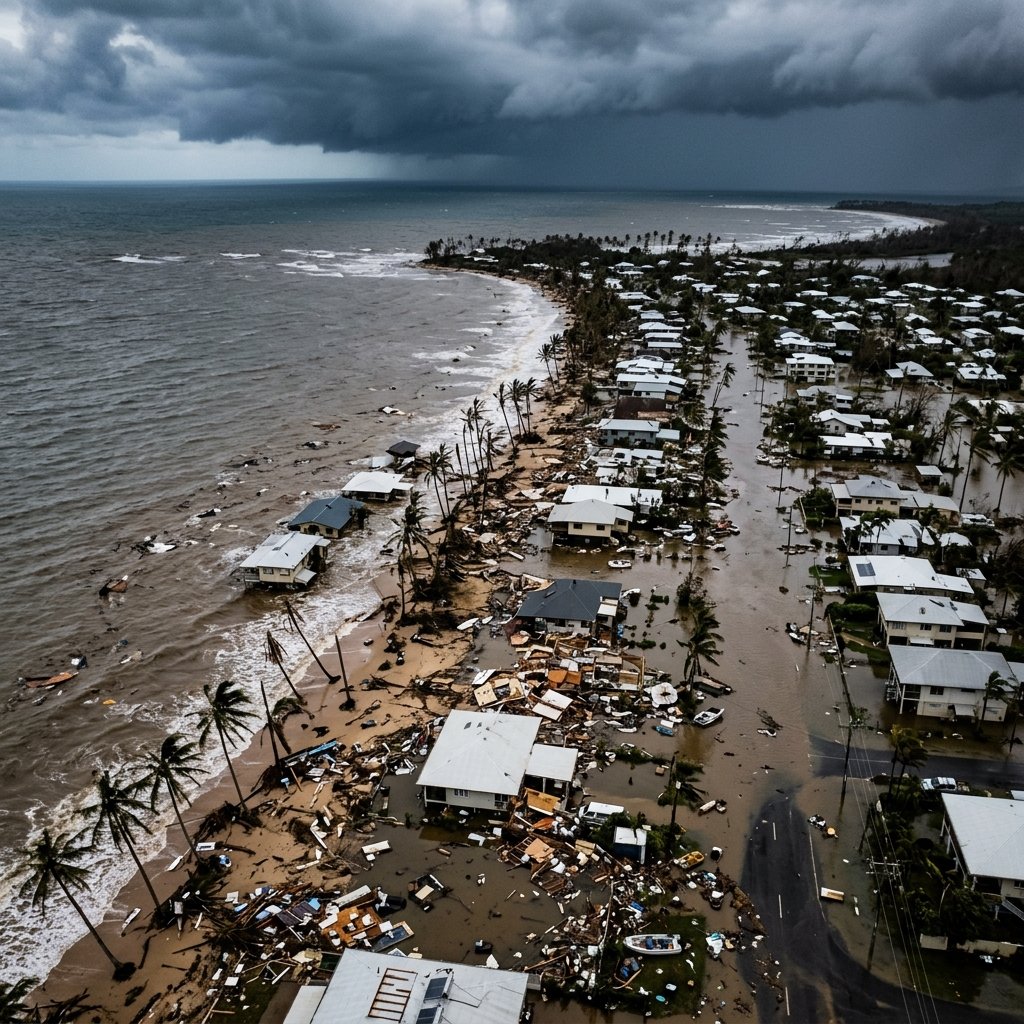
Photos of Mission Beach and Cardwell in the days after the storm hit. The big wave and strong winds changed the shape of the coast.

A broken rainforest after Cyclone Yasi — trees snapped, the tops of trees gone
Figure 1.1

The tops of the trees took hundreds of years to grow. The storm ripped them off in just hours.

A view from the sky of Mission Beach after Cyclone Yasi — buildings full of water, palm trees with no leaves
Figure 1.2

The 3 to 5 metre wave made it look like the sea and the town were one big thing.

Weather Records

The Path of the Storm

The weather office made maps of where Yasi went. They show the path from the sea near Vanuatu to Mission Beach where it hit as a Category 5 storm.

A map from the weather office showing Cyclone Yasi's path from Vanuatu to Mission Beach in Queensland
Figure 2.1

Path map — where Yasi started and where it grew into a Category 5. © Bureau of Meteorology 2011.

A map of how much rain fell in Far North Queensland when Cyclone Yasi hit
Figure 2.2

Where the rain fell — more than 300 mm fell on Mission Beach and Tully in just one day.

News Stories

The News Front Pages

Papers and news all over Australia told people about Yasi as it happened. On 2 February 2011, every paper was talking about the 175,000 people who left their homes. The whole country was waiting and watching.

The Australian

“Monster Yasi Hits — 175,000 Flee”

In easy words: "A huge storm called Yasi has hit. 175,000 people have run away to be safe."

2 February 2011 — One of Australia's biggest papers tells the story. So many people left their homes. It was the biggest move of people to stay safe in Australia since a war.

2 Feb 2011
The Cairns Post

“The Night Yasi Came”

In easy words: "This is the night when the big storm hit."

3 February 2011 — The local paper made a special edition. It had the first photos from the coast. People slowly got their phones and power back.

3 Feb 2011
The Sydney Morning Herald

“The Rainforest’s Long Road Back”

In easy words: "It will take a long time for the rainforest to fix itself."

March 2011 — A big story about how nature fixes itself. People who study trees started to look at how this special forest was coming back after the storm.

March 2011