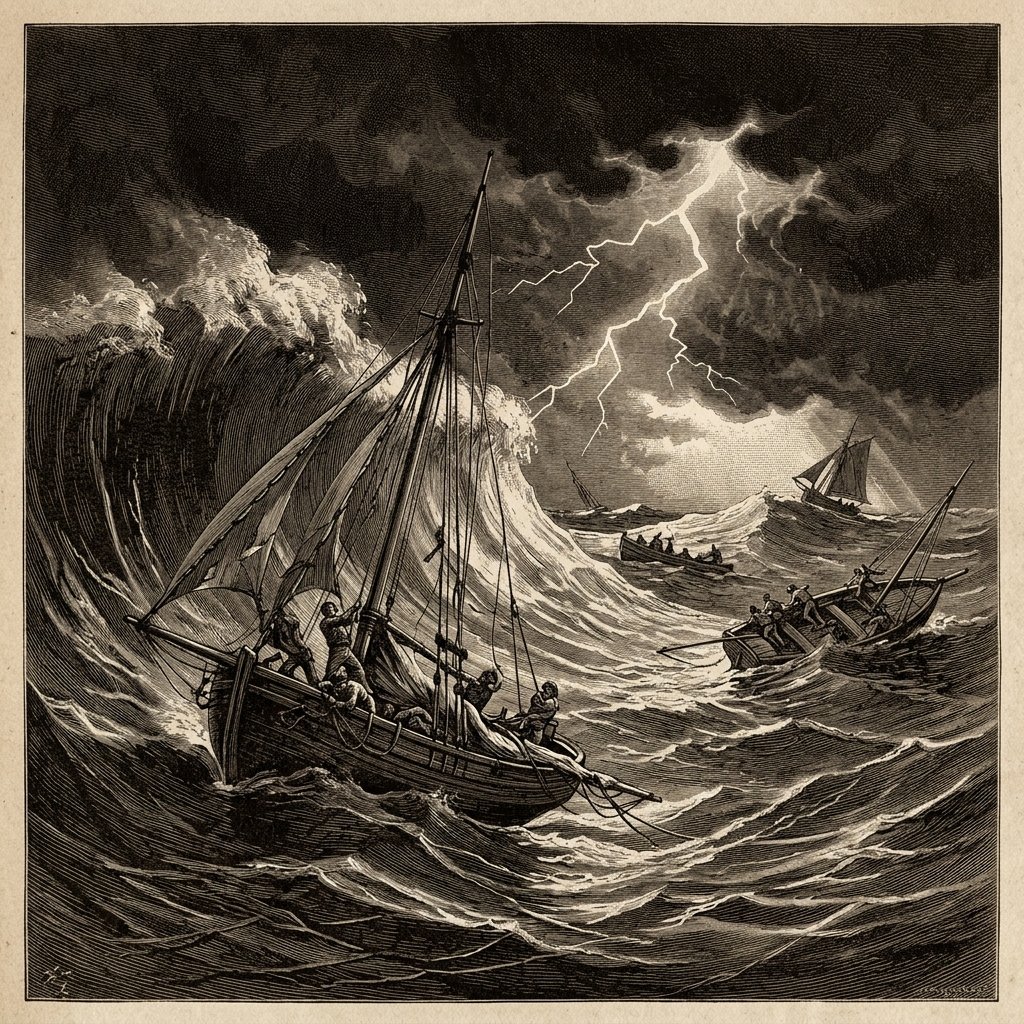
An old picture of the big storm in 1899 at Bathurst Bay. Pearl boats are being hit by very big waves like mountains.
Disaster • 1899

Cyclone Mahina

The sea went up 13 metres — and 300 people died before the sun came up at Bathurst Bay.

J
By Dr. Joshua Falken
8 April 202614 min read

No one knew it was coming. There was no radio. There was no weather office. In the first days of March 1899, more than 100 pearl boats came to Bathurst Bay. This is in the north of Queensland. The boats were looking for pearl shell. People paid a lot of money for pearl shell back then. It was one of the best things Australia sold to other countries. On the boats and on the shore were more than 400 people. What happened next is still the worst storm for killing people in all of Australia's past.

The pearl boat work was a hard and tough life more than 100 years ago. The boats worked in the warm north seas of Queensland and Western Australia. The crew came from lots of different places. First Nations men and women had been diving here for a very long time. They worked with men from Japan, Malaysia, Timor, the Philippines, and the islands of the Pacific. Life on the boats was very hard. Today we would say that some of them were made to work against their will.

These were the men on the boats at Bathurst Bay when Cyclone Mahina hit on 4 March 1899. People who study weather have looked back at this storm. They think it was a very big Category 5. The air pressure may have been just 914 hPa. That would make it one of the strongest storms ever in this part of the world. What we do know for sure is the wave. A wave 13 metres high came on the land. That is still the biggest wave from a cyclone that has ever been written down in the whole world.

I looked for my brother among the wreckage for three days. He was on the lugger nearest the shore. There was nothing left of it. Nothing at all.

— Survivor account, Bathurst Bay, March 1899 (recorded by inquiry)

In easy words: I looked for my brother in all the broken bits for three days. His boat was the closest one to the shore. But the boat was gone. There was nothing left at all.

The Wave That Put Dolphins in Trees

The wave was so big that people at the time said they saw dolphins stuck up in trees. The trees were kilometres away from the sea. Fish were found on hills 20 metres above the sea. Years ago, people thought this was not true. But now, people who study rocks and the land say it is true. They have found proof.

All the boats were broken. More than 100 boats were smashed, pushed onto the land, or tipped over. The big wave and strong winds did it. People in camps on the shore were not safe either. The wave came on the land very fast. No one could run away. That night there were more than 400 people at Bathurst Bay. We know 307 of them died. The real number is likely much bigger. Many of the crew did not have their names put on any list.
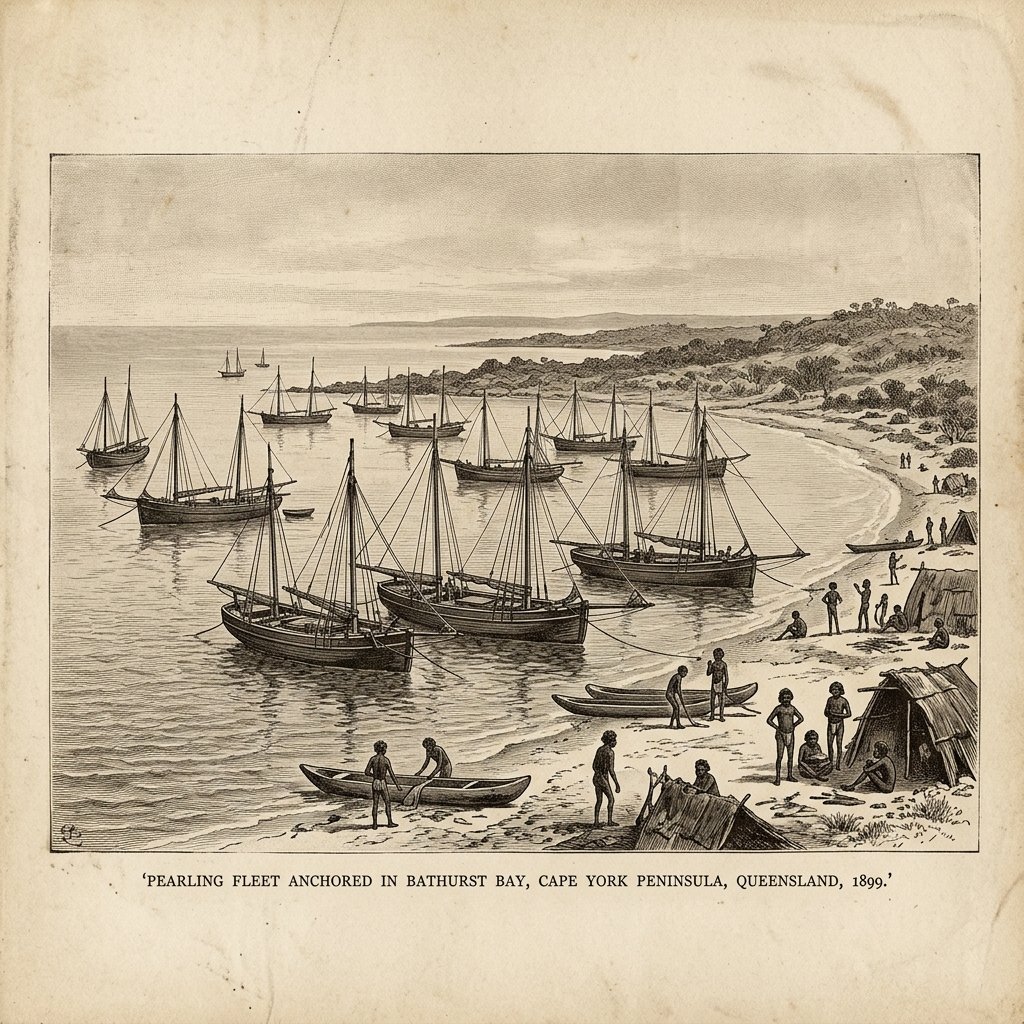
An old picture of pearl boats in a calm Queensland bay in 1899, before the storm came
The Pearl Boats Pearl boats like these were very important to Australia a long time ago. Cyclone Mahina's big wave lifted them up and threw them around like little sticks.
Click to expand

A Storm With No Warning

This was a sad time for lots of reasons. Australia was not yet a country. It would be made a country in January 1901, less than two years later. The tools that help us track storms today were not yet made. There were no phone lines in Cape York. No one was watching storms closely.

The boat bosses were good at reading the weather. But they did not have the tools to see this big storm coming. The storm grew very fast. By the time their weather tool showed a bad storm, it was too late. The big wave was just hours away.
groupImpact Story — People

The Men of the Boats Who Were Forgotten

“He was seventeen years old. He came from Okinawa to dive. He could hold his breath for three minutes. He could not outswim the surge. My grandmother carried his name for the rest of her life.”

— Descendant of a pearling crew member, recorded 2019

In easy words: He was just 17 years old. He came from a place called Okinawa in Japan to dive for pearls. He could hold his breath for three whole minutes. But he could not swim away from the big wave. My grandma remembered his name all her life.

The people who died at Bathurst Bay were not all the same. Some were First Nations Australians. They had been diving in these waters for a very long time. Some of them had to work for very little money, or no money at all. Some of them came from Japan, from a place called Okinawa. Some came from Malaysia, the Philippines, and Timor. They came to Queensland to work.

Most of them are not in any book or list from that time. When people looked into the storm, they mostly cared about the lost boats and lost money. Most of the dead have no name that we know today. We do not know who they were.

Cyclone Mahina shows us something that is still true today. In a big storm, the people in the most danger are the ones who can do the least to stay safe. The boat bosses had money. They could pick where the boats went. They could choose to sail home when the weather looked bad. The men who did the diving had no such choice.

Many years after Mahina, Queensland made some new rules to help keep pearl divers safe. But at the time, nothing changed right away. The next year, people went back to work on the pearl boats. New boats were made. New men came to work, often from the same places as the ones who had died.

lightbulb

Things to Learn: Who Is Most at Risk in a Storm

In a big storm, not all people are in the same danger. It is very important to think about who is in the most danger — and why.

  • check_circleSome people are at more risk than others. This can be because they are poor, or they do not speak the same language, or they have no home. These things make it harder to stay safe.
  • check_circleWarnings save lives. But only when people can hear them. In 1899, there were no storm warnings. Today, Australia has very good warnings. But it can still be hard to tell people who do not speak English, do not have the internet, or live far out in the bush.
  • check_circleOld unfair things can still hurt people today. The people who died at Bathurst Bay had no place to remember them for over 100 years. In 2006, people finally said thank you and sorry to the First Nations and other families who lost men in the storm.
  • check_circleToday we plan better for storms. The people who run our country have rules now. They must think about the people who are in the most danger. They must help them before, during, and after a storm.
After the Storm

All the Boats Were Broken

Old pictures of the pearl boats and what was left after Mahina's big wave hit Bathurst Bay.

An old brown photo of pearl boats in a Queensland bay about 1895
Figure 1.1

More than 100 pearl boats were at Bathurst Bay. None were still whole after the big wave.

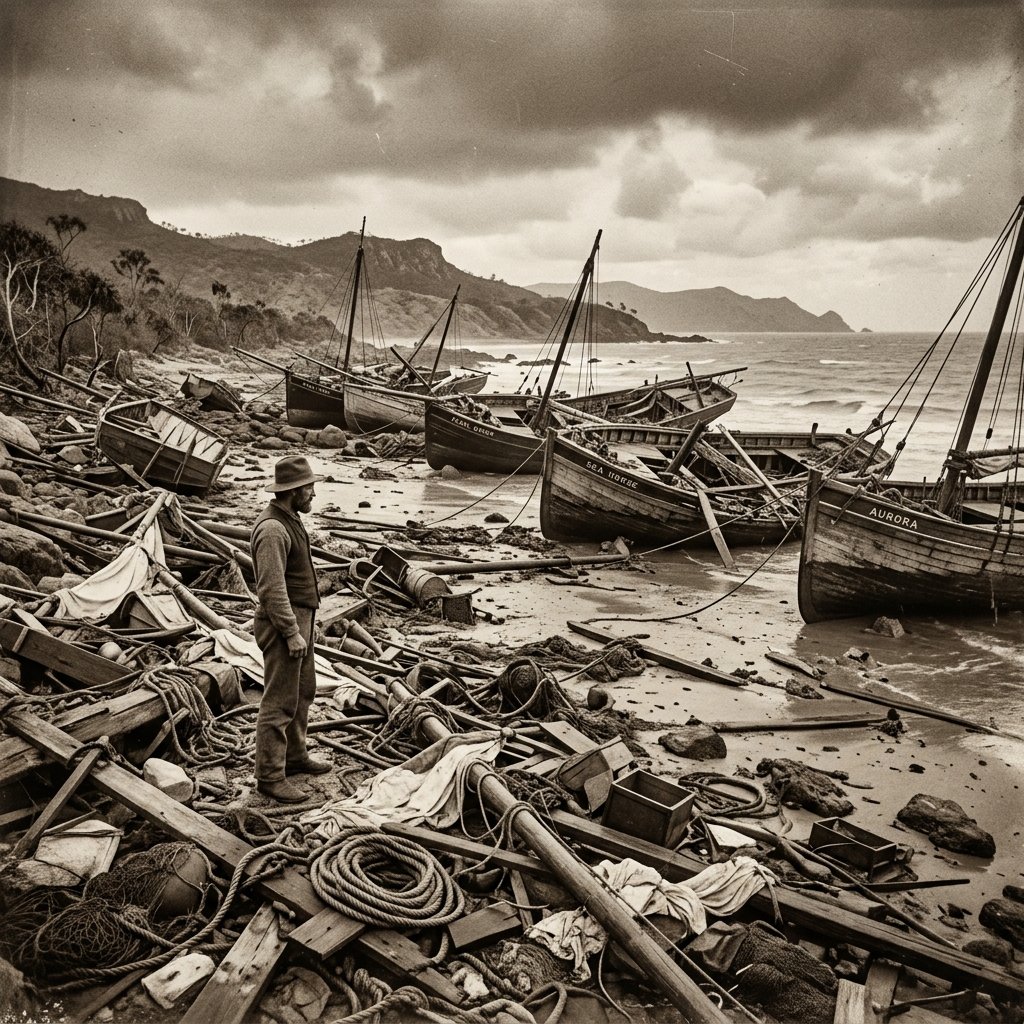
The empty shore at Bathurst Bay in 1899 — broken bits of pearl boats and junk spread all over the beach after Cyclone Mahina
Figure 1.2

Bathurst Bay after the storm — everything was broken all the way to the trees.

Old Records

The Path of the Storm

Today we can look back at Cyclone Mahina and work out where it went and how strong it was. We use old notes and air pressure readings from ships that did not sink.

Looking Back at the Storm's Path

Bathurst Bay,
Cape York Peninsula

12°45′S, 143°30′E

Hit the land: 4 March 1899
Air pressure in the middle: about 914 hPa
A 13-metre wave where it hit

Figure 2.1

We worked out the storm's path from old notes from people who lived and from ships' air pressure readings. No one was keeping full weather records back then.

How Big the Wave Was

13 m

World's Biggest

The wave at Bathurst Bay is still the biggest wave from a cyclone that we know about. It happened anywhere on Earth. Dolphins were found stuck in trees. Fish were found on hills 20 metres above the sea.

Figure 2.2

The 13-metre wave — still the biggest in the world. People who study the land say the wave went many kilometres on the shore. © Geoscience Australia, 2014.

News Stories

The News Front Pages

The news got to Brisbane weeks later by boat. The papers at that time found it hard to tell people how bad the storm was at this faraway bay.

The Queenslander

“Catastrophe at Cape York — 300 Perish in Fearful Storm”

In easy words: "A very bad thing happened at Cape York. 300 people died in a scary storm."

March 1899 — The big picture news paper tells the people of Queensland about the storm, weeks after it hit.

March 1899
The Brisbane Courier

“Pearl Fleet Destroyed — Industry in Crisis”

In easy words: "All the pearl boats are broken. The pearl work is in big trouble."

March 1899 — The news talked a lot about the money and boats that were lost. They did not talk as much about the people who died.

March 1899
The Sydney Morning Herald

“The Wave That Moved the Sea”

In easy words: "A wave so big it was like the sea itself moved."

April 1899 — A later story tries to make sense of what people saw. They saw a 13-metre wave. At first, people did not believe it.

April 1899