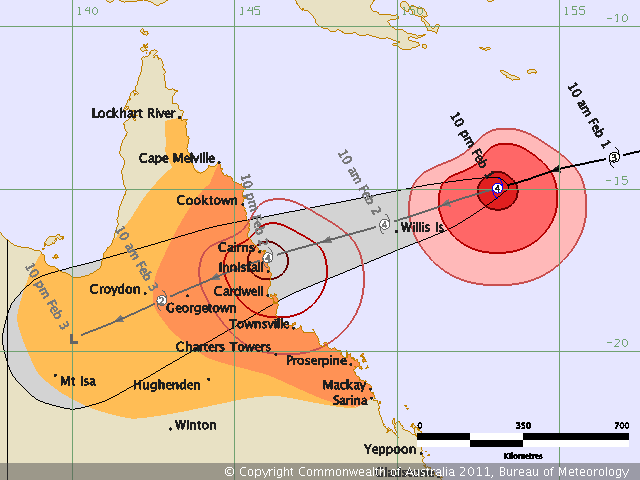
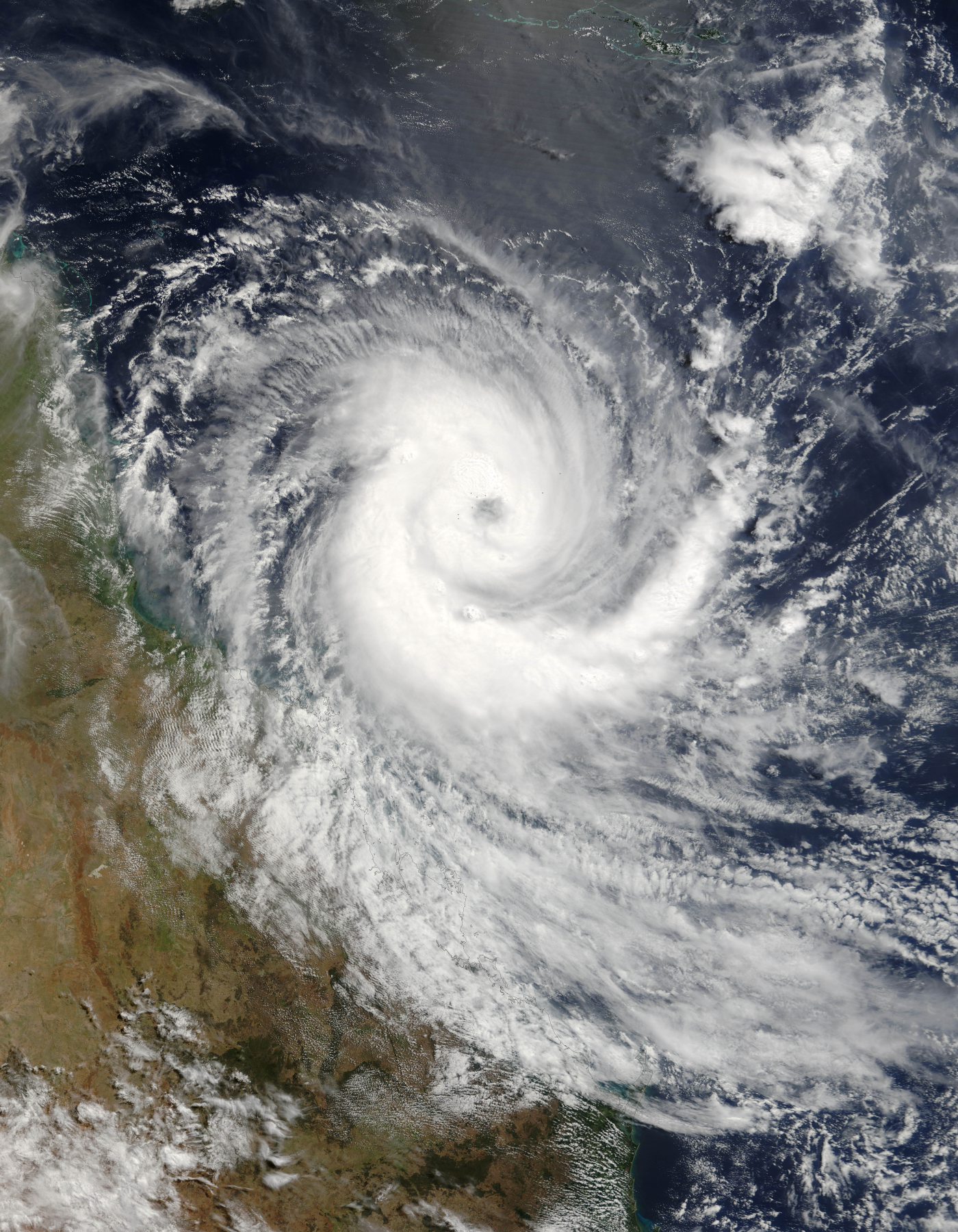
On 20 March 2006, the sun came up very slowly near Innisfail. It did not look like a normal morning. The sky was a bad green-grey. Cyclone Larry had been moving west for three days. It got stronger each hour. It was now one of the biggest storms to hit Australia in a long time. At 6:28 in the morning, the storm was about to break the banana farms in Far North Queensland.
The people who live near Innisfail had been told. For two days, the weather people had been telling them. They gave warnings from Cairns all the way to Cardwell. Schools were shut. Shops ran out of food. The town of Innisfail went quiet. Innisfail is a sugar town. Families moved their cars up hills. They tied down their roofs. Then they sat in halls and bathrooms with beds held up to the windows.
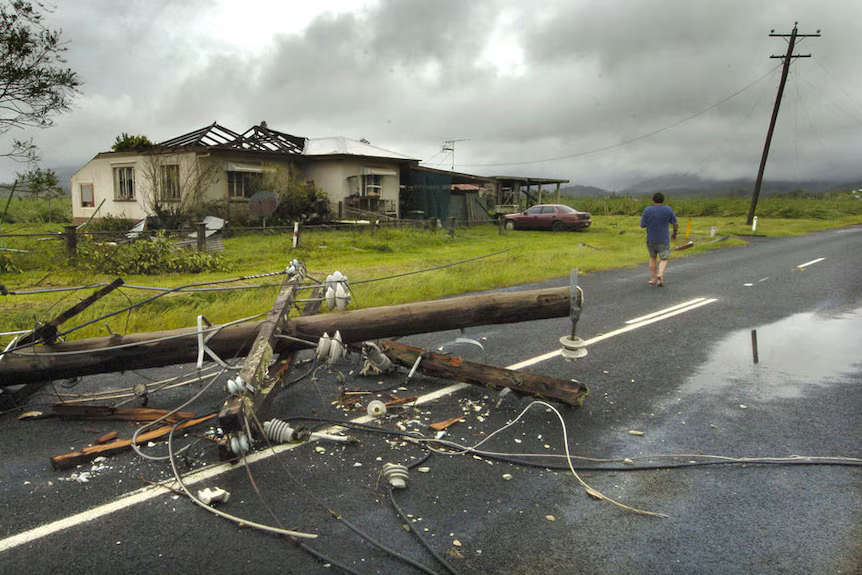
At 6:28 in the morning, the eye of Larry hit the land between Babinda and Innisfail. It was a Category 5 storm. The wind was 205 km/h. The big gusts were more than 240 km/h. Trees that had been growing for 100 years lost all their leaves in just minutes. Bits of roof flew through the air like rockets. The Atherton Tablelands grow most of the bananas for Australia — about 80 out of every 100. That place was broken before most people had eaten breakfast.
"The bananas were just gone. The cane was gone. Fifty years of farming, obliterated before breakfast. But we were still standing — and that was all that mattered.
In easy words: All the bananas were gone. All the sugar cane was gone too. We had worked on this farm for 50 years. It was all broken before breakfast. But we were still alive. That was the best thing.
Not One Person Died
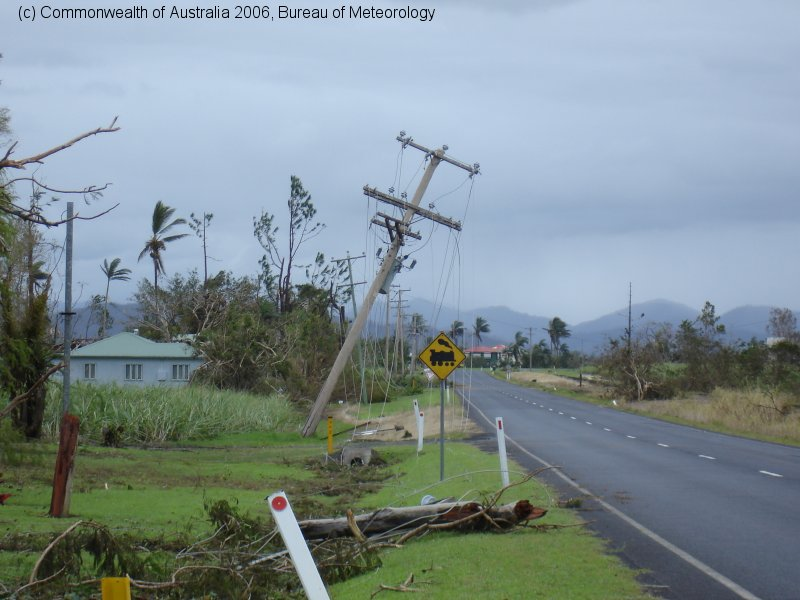
The best part of the Cyclone Larry story is what did NOT happen. The storm was very strong. The wind snapped big power poles in half. It ripped the bark off the trees. But not one person died from the storm. That is amazing. It shows that Australia is good at helping people when a storm is coming. And the people listened to the warnings.
People started getting ready two days before. Helpers moved lots of people to safe places. Some went up to the hills. Some went to strong cyclone shelters. The people who stayed home sat in small rooms with no windows. After the storm, people looked at all the broken houses. They saw that sitting in bathrooms, halls, and under stairs kept people alive. Even when the rest of the house was broken, these rooms stayed safe.
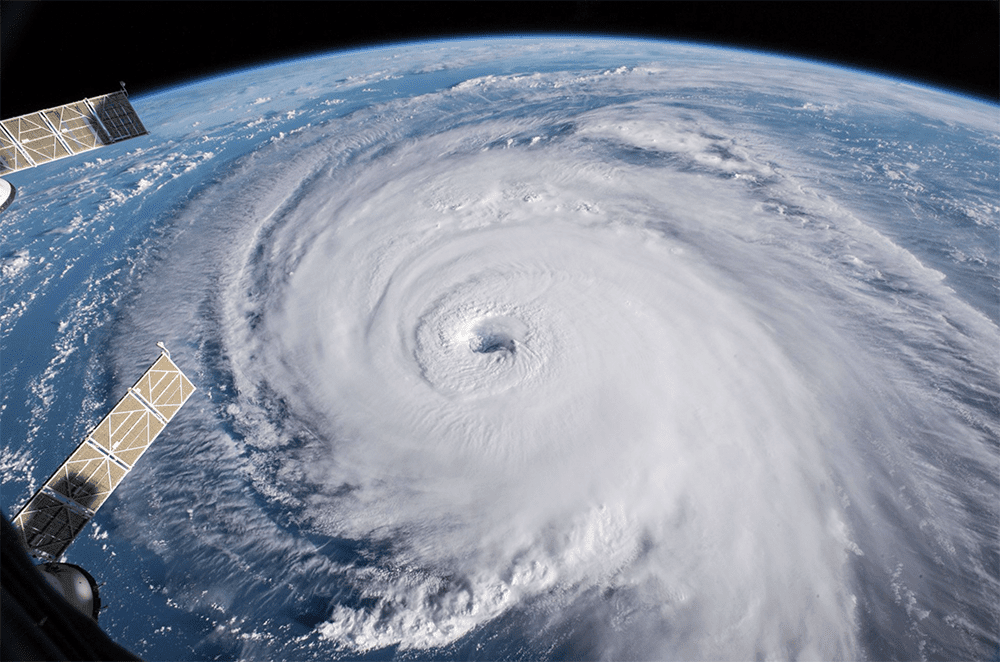
The Banana Farms Are Broken
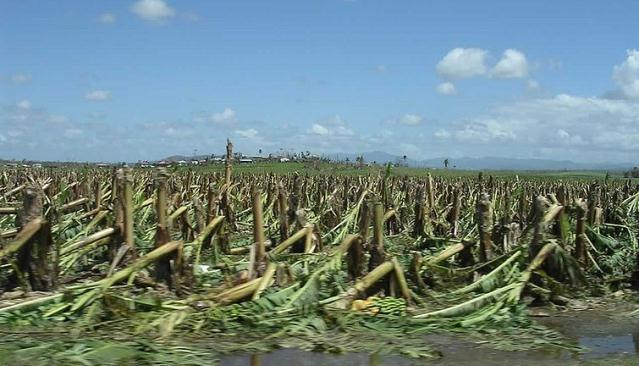
The big damage to the farms is the main thing we remember about Larry. Most of Australia's bananas grow in this part of Queensland. The storm broke nearly all of them in one morning. Farm after farm was a mess. The banana plants were ripped out of the ground. The water pipes were broken. The sheds were smashed. Machines were stuck under piles of wood and metal.
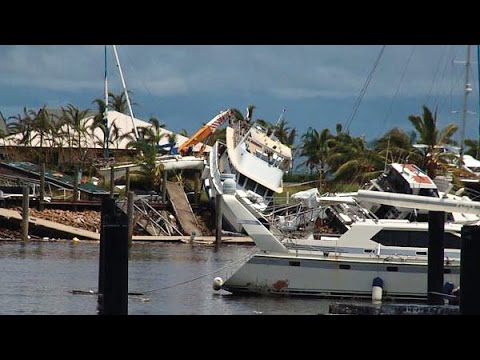
In the weeks after the storm, the price of bananas went up very high. In some shops, bananas were more than six dollars for just one kilo. It took nearly two years for things to go back to normal. Larry also broke the sugar cane farms near Innisfail. It knocked down trees that people grow for wood. It hurt holiday places when it was their busy time. All up, Larry cost about 1.5 billion dollars (that is one thousand five hundred million).
Innisfail Fixes Itself
Innisfail is a pretty town. It was built after another big cyclone in 1918. Its old buildings are special. Larry hit Innisfail hard. Roofs were blown off. Walls fell down. Many old buildings in the main street were broken. But the town was strong. In just a few hours, the people started to clean up the roads and help their neighbours.
In the days after, lots of helpers came to Innisfail. Army people came. Fire and rescue people came. Builders came. They got the power back on. They cleaned up the roads. They put up small huts for people who had no homes. The government gave more than 150 million dollars to help people fix things. It was hard work. But it worked well. It showed that when we plan and work together, we can help after a big storm.