Your browser is blocking local storage. You can still use the lesson, but work will not autosave after this page closes.
M
Mr Sutherland · English · Information texts
Strange Australian Mammals
Ready
Stage 1 · Learn
Read like an information writer
Select marked phrases and study the diagram and map. Each annotation reveals what the report is doing — structure, language, visuals, and history.
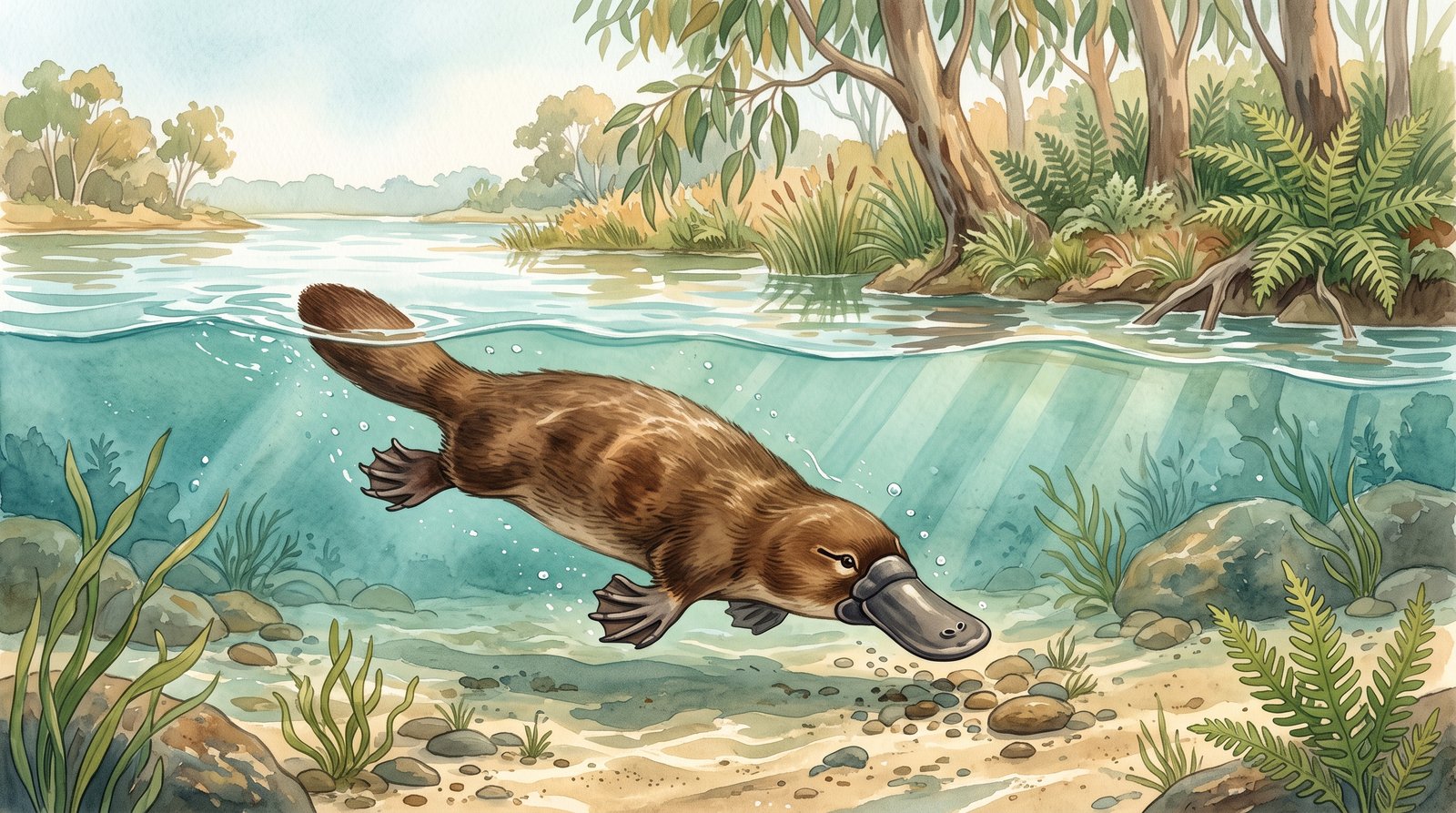
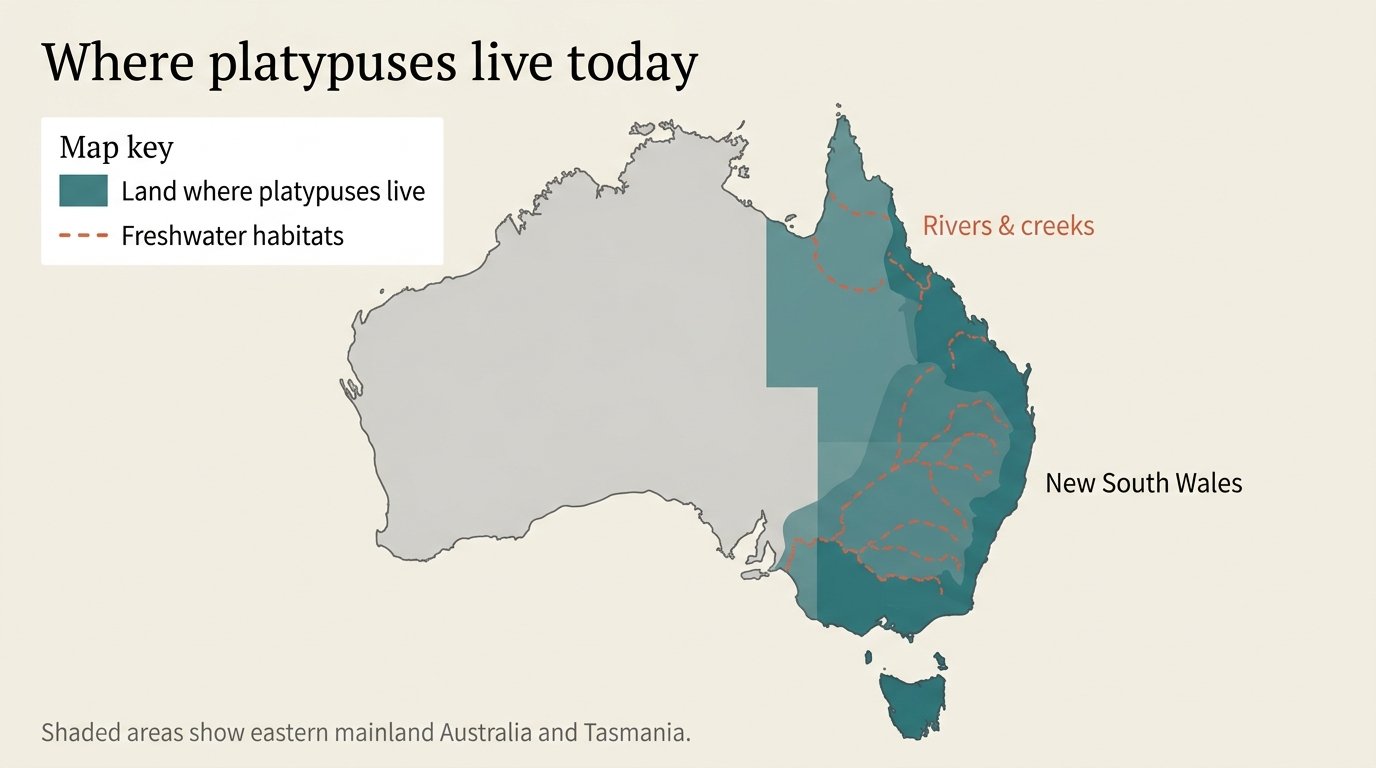
Platypuses are well adapted to life in eastern Australia's rivers and creeks.
Information report · Annotated model
The Platypus
An Australian monotreme
Modern information report · 328 words
It is one of Australia's most unusual native animals.
Monotremes are found only in Australia and New Guinea. Scientists classify them separately from other mammals because of their egg-laying reproduction.
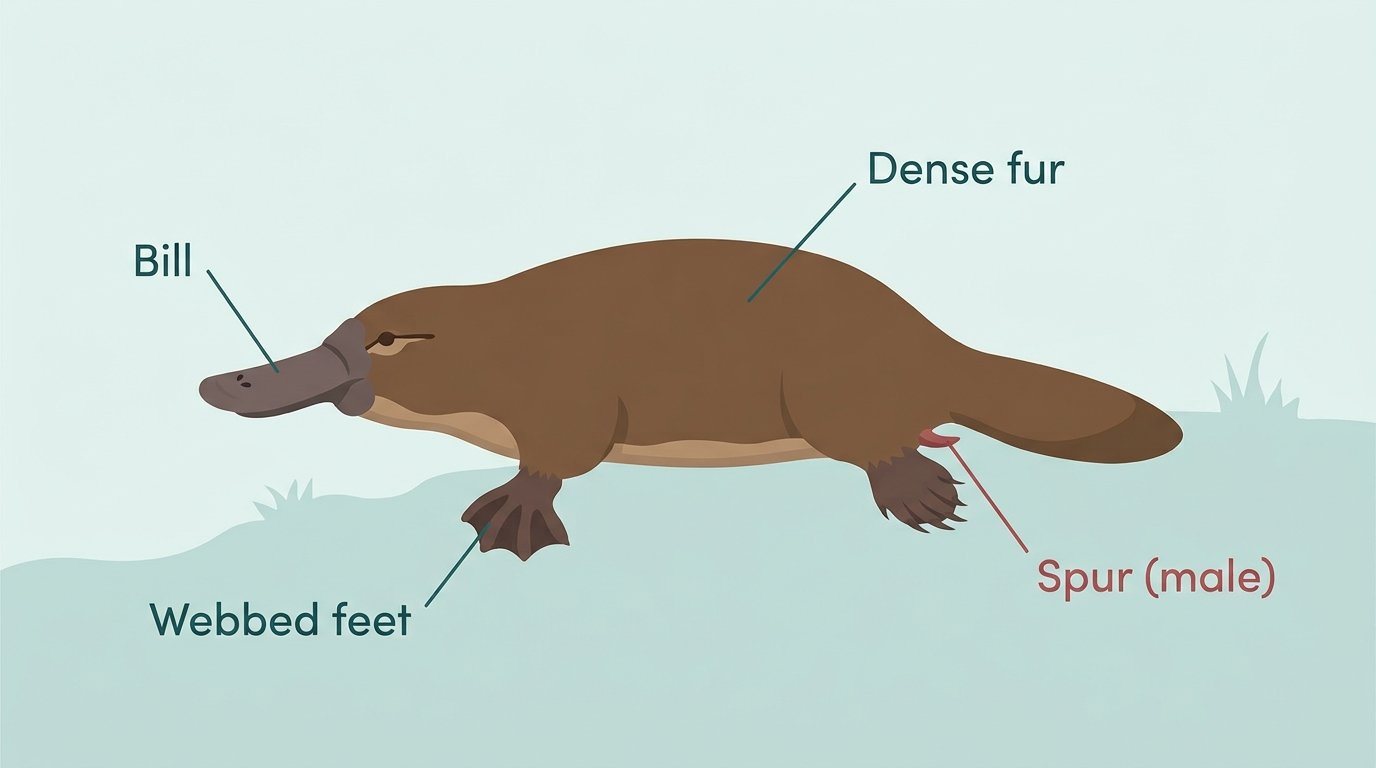
The platypus has a streamlined body covered in dense, waterproof fur. It has a , for swimming, and a beaver-like tail that stores fat. Male platypuses have a sharp spur on each hind leg that can deliver venom during breeding season.
Diagram caption: .
How platypuses feed
and searches the riverbed with its bill. Sensitive receptors in the bill use to detect tiny electrical pulses from insects, worms and small crustaceans. for resting and nesting.
Platypuses live in freshwater streams, rivers and lakes in eastern Australia and Tasmania. They need healthy waterways with banks for burrows and enough food in the sediment. They are shy and mostly active at dawn and dusk.
Use the platypus model and the Look back visuals. At least two checks need the diagram or map — not the paragraphs alone.
Stage 3 · Apply
Information detective
Read two different text types about the thylacine. Switch tabs — several questions need the map, caption, timeline, or comparison diagram, not the writing alone.
Reconstructed historical notice for classroom use — not a scanned original.
Hobart Town Gazette · Thursday, 14 August 1888
£1 Reward — Native Tigers
Government bounty on the destruction of hyena-like marsupial wolves
NOTICE TO SETTLERS. A reward of One Pound (£1) will be paid by the Government for every adult Native Tiger (Thylacinus cynocephalus) destroyed, upon production of the scalp at the nearest police office. Similar payments apply to cubs at half rates.
The so-called "Tiger" or "Hyena" is a savage marsupial predator that preys upon sheep, poultry and native game. Settlers complain that these animals raid fenced paddocks under cover of darkness and leave carcasses half eaten. Trappers report that the beasts are shy by day but bold when hungry.
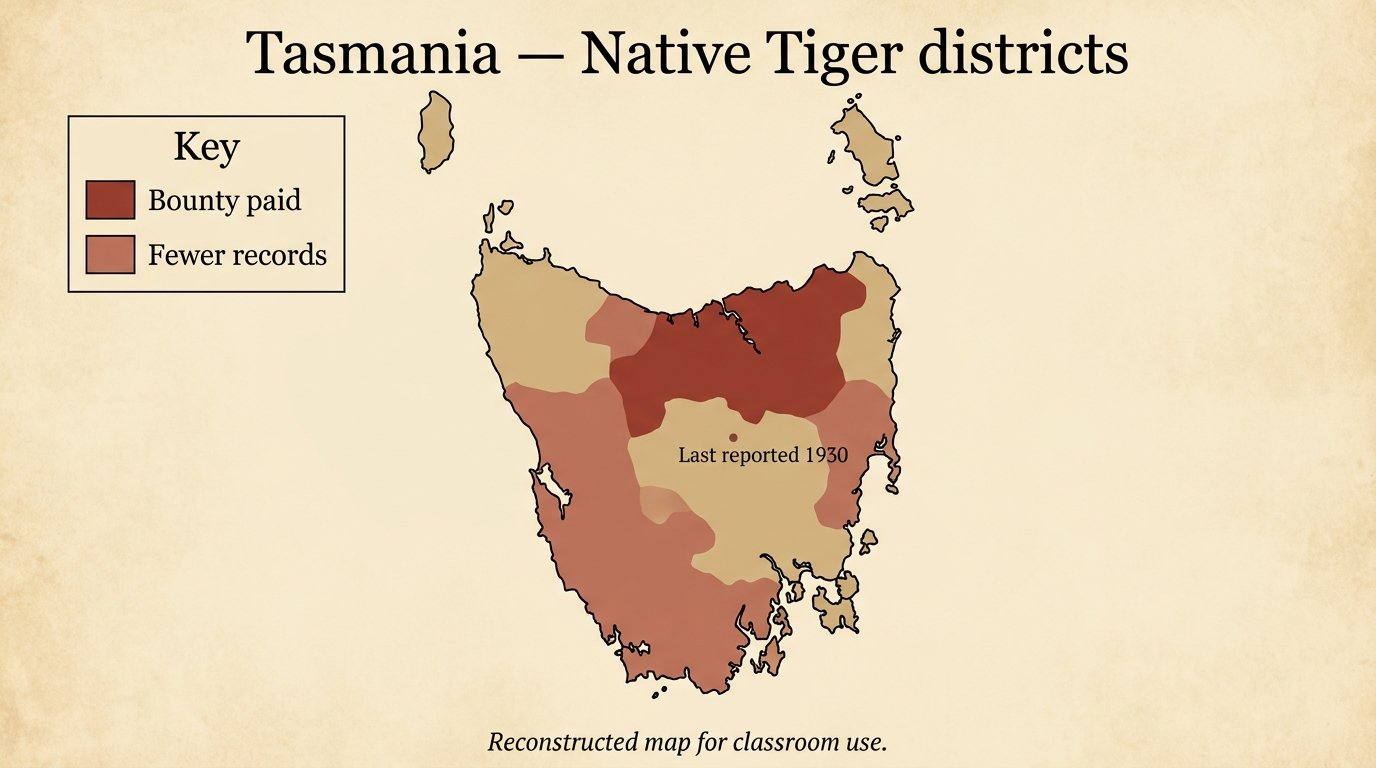
Farmers in the midlands and northern districts are urged to clear their runs of this pest without delay. Dogs trained for the work may be used, provided they are kept under control. All skins should be dried and forwarded with the scalp for inspection.
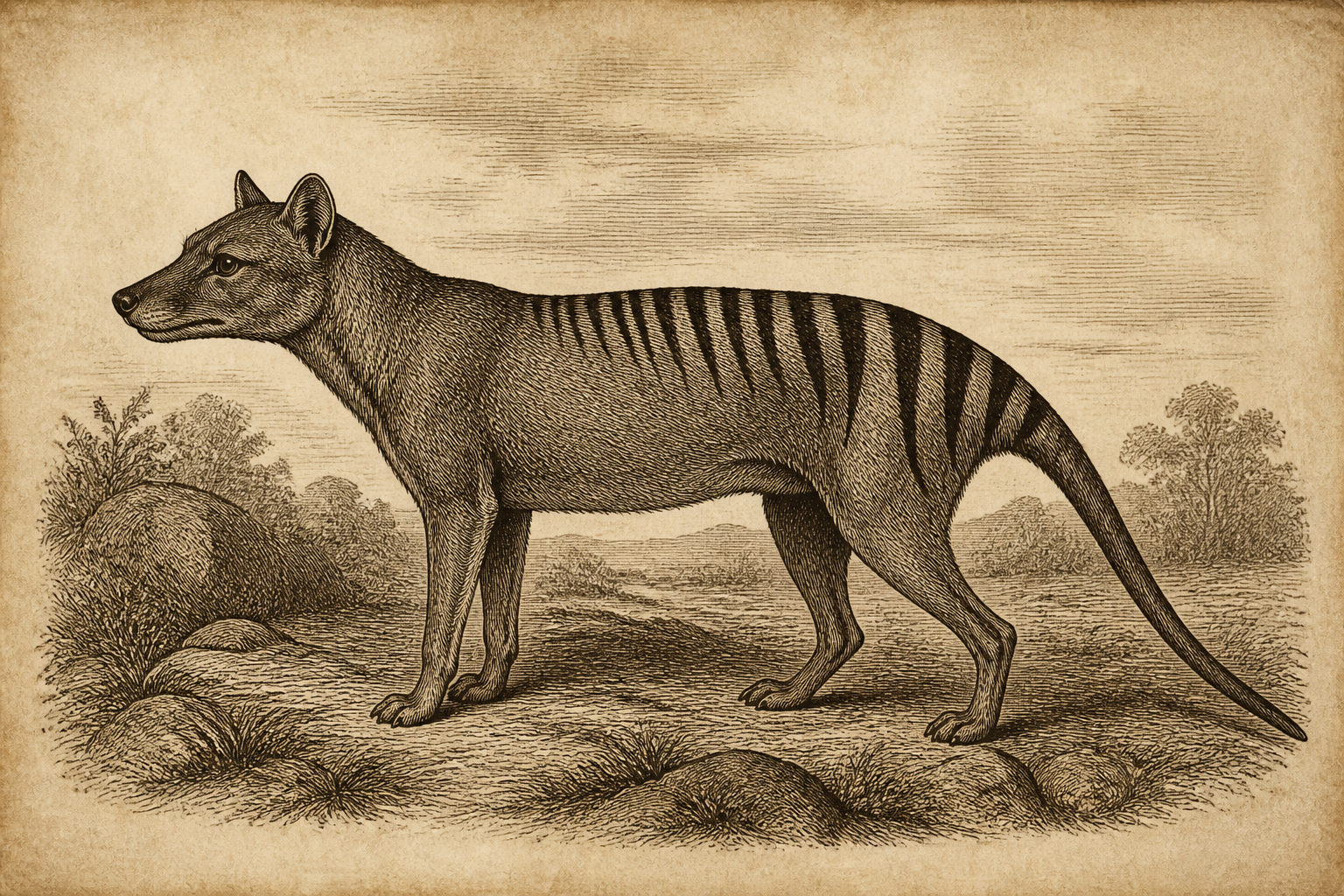
The native tiger (Thylacinus cynocephalus) — a hyena-like marsupial wolf, striped across the back and rump. Adults may exceed five feet from nose to tail.
Reports from the central highlands suggest numbers remain higher than desirable. The reward will remain open until further notice. Magistrates may extend payments in districts where sheep losses have been heaviest.
Persons making false claims will be prosecuted. By order of the Chief Secretary's Office.
Darkest shading shows districts where bounties were paid most often (1888–1909).
Natural History Museum · Extinct Australians
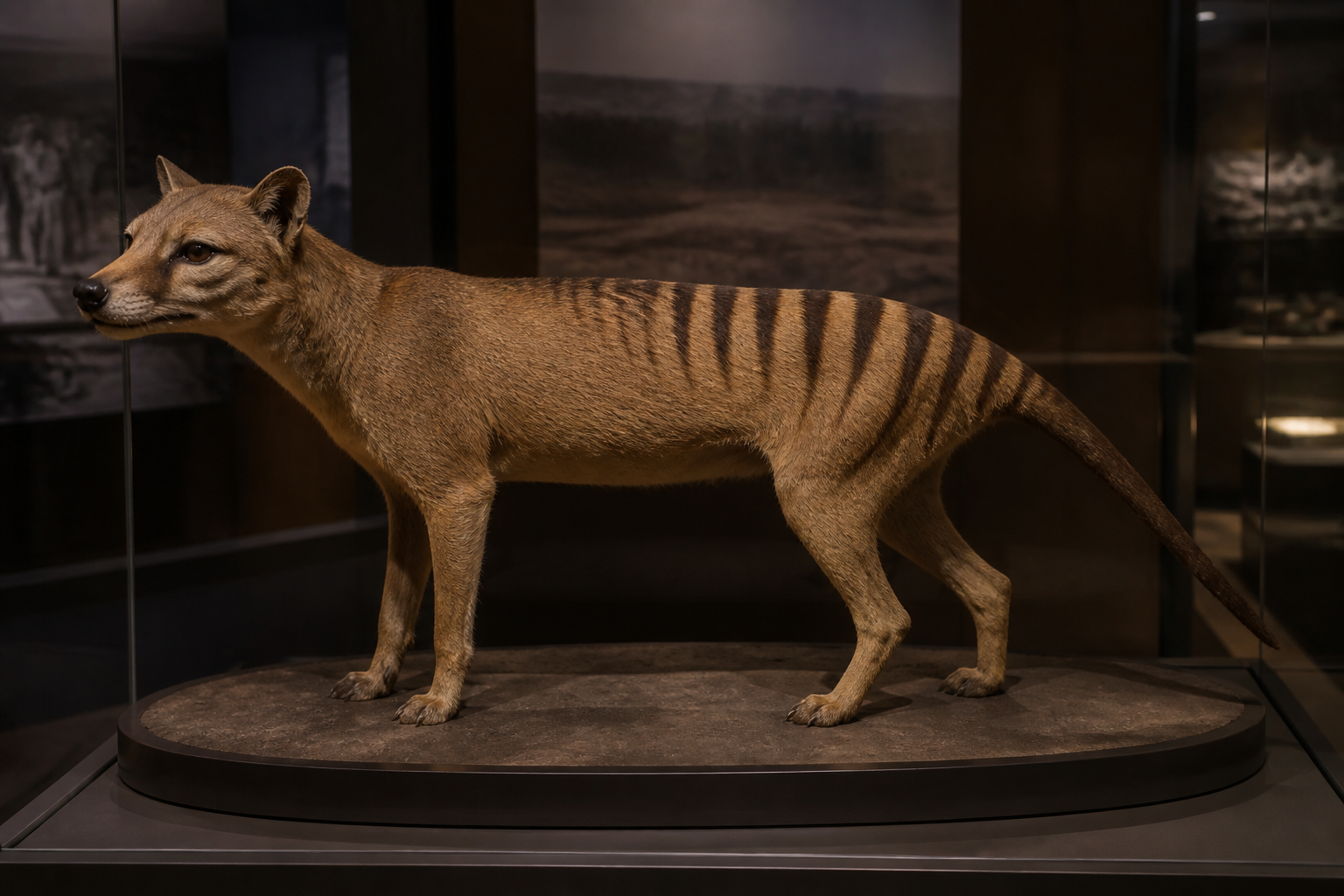
Thylacinus cynocephalus
Thylacine · Tasmanian tiger · Last of its kind
Specimen collected 1923 · Beaumaris Zoo, Hobart. The thylacine is extinct — no wild population survives.
Timeline
1888–1909 — Government bounties encourage widespread hunting.
1923 — Last known wild thylacine shot in Tasmania.
1936 — Last captive thylacine dies at Beaumaris Zoo, Hobart.
1986 — Thylacine declared extinct by international agreement.
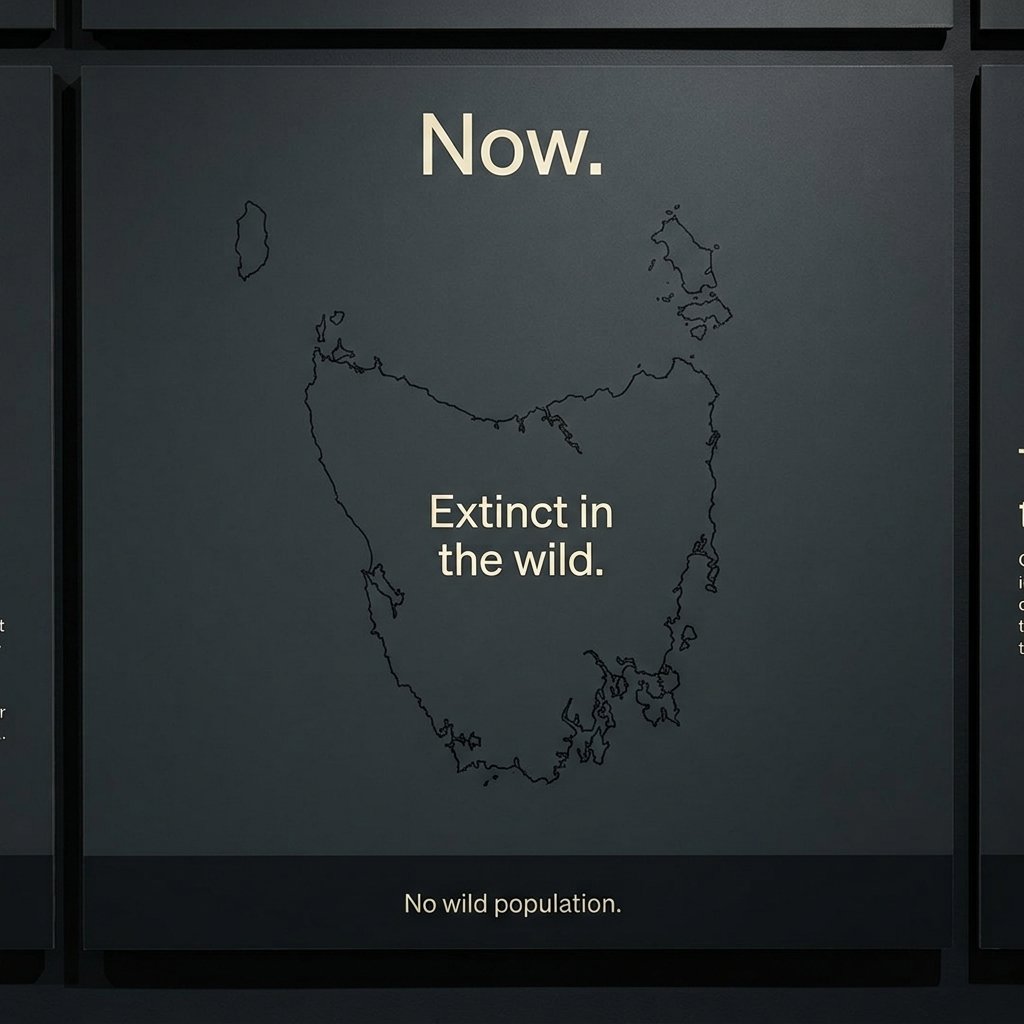
Range: then and now
Thylacines lived across Tasmania.None remain in the wild.
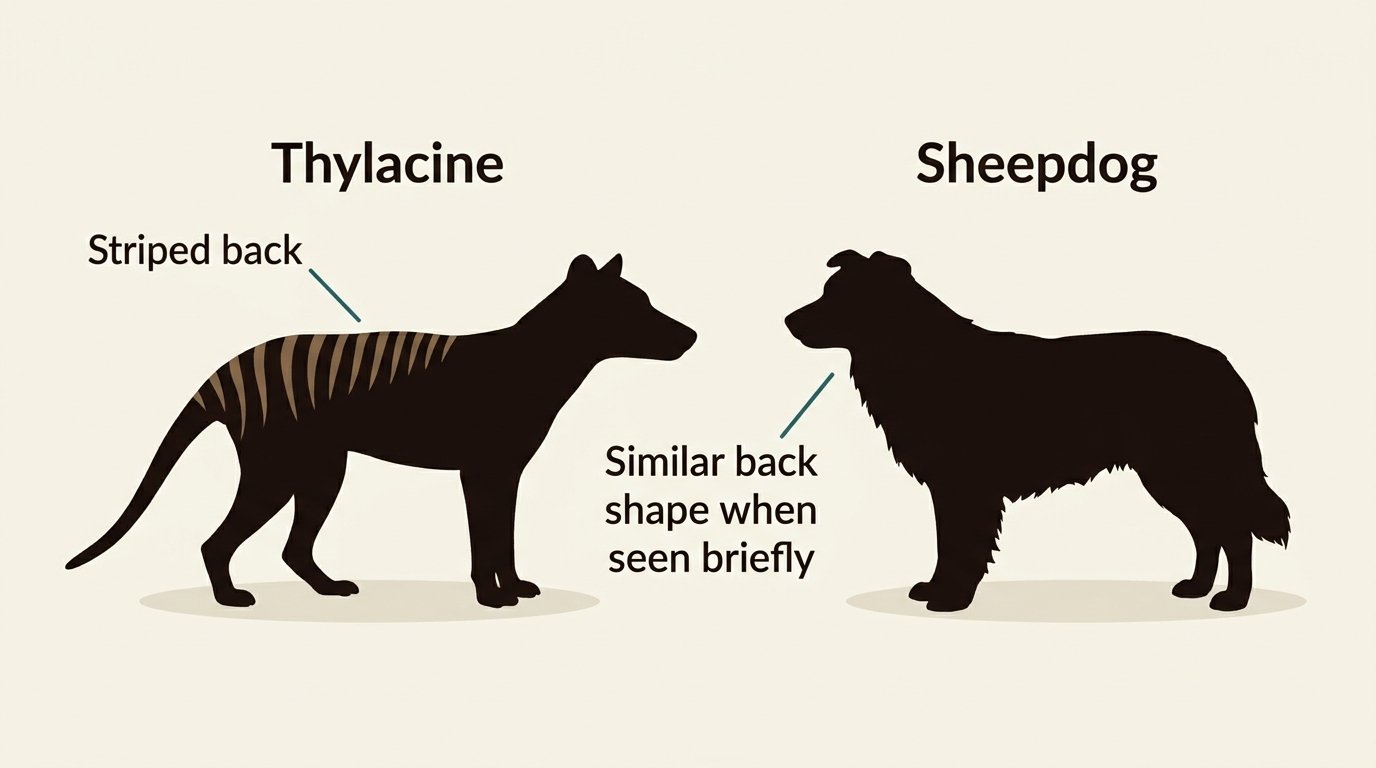
Thylacine vs dog — why settlers were confused
What settlers believed
The "native tiger" was a sheep-killing pest. Newspapers called it a hyena or wolf. Bounties would protect farms.
What we know now
The thylacine was a marsupial predator, not a dog. Hunting and habitat change drove it to extinction. The platypus — once thought a fake — is still alive; science corrected that story in time.
Save or hand in
Your response package
Download a teacher-friendly summary, back up your work as JSON, or import a previous JSON file.