01. EXECUTIVE SUMMARY
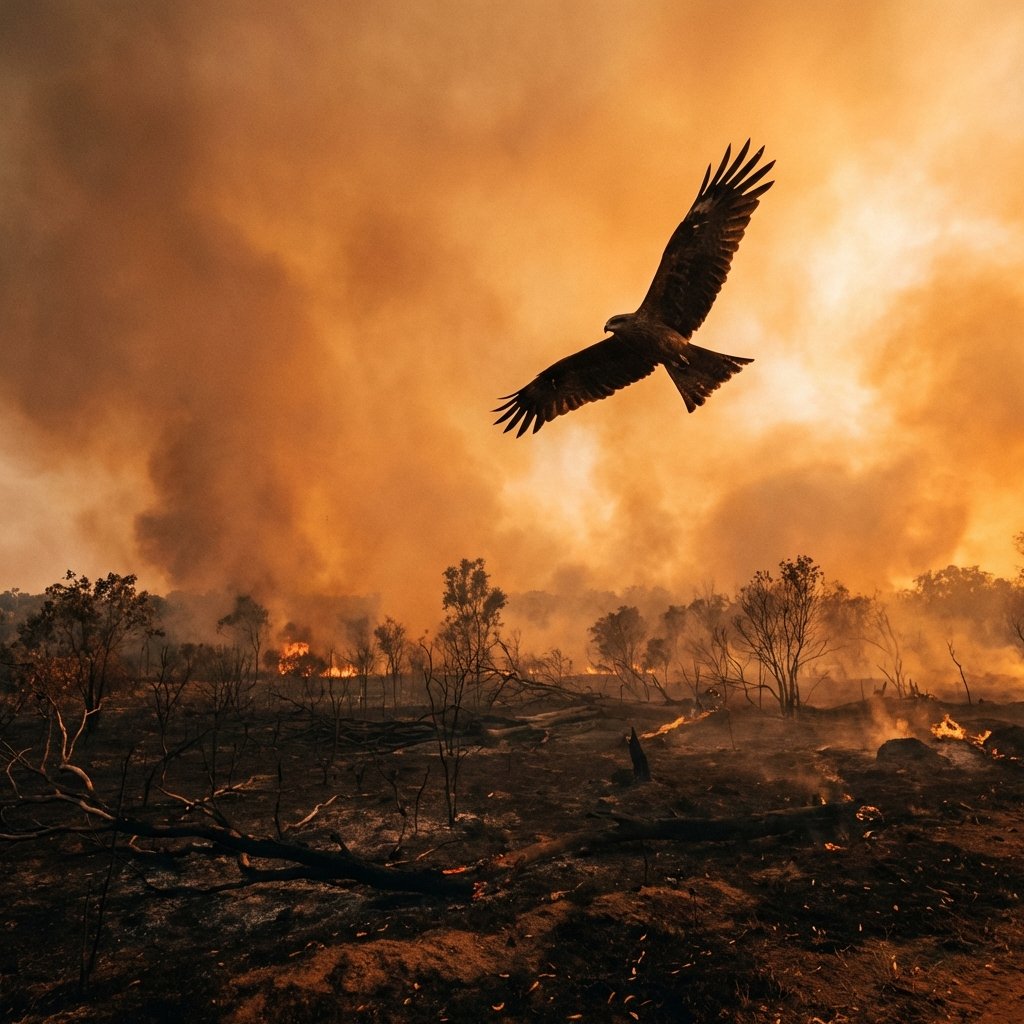
For decades, people in Northern Australia have told stories about "Firehawks"—birds that intentionally spread fire. Scientists are now combines Indigenous knowledge with eyewitness accounts to study this amazing behaviour. While some experts are still looking for video proof, local rangers and firefighters have seen these avian arsonists in action many times.
02. THE THREE SPECIES
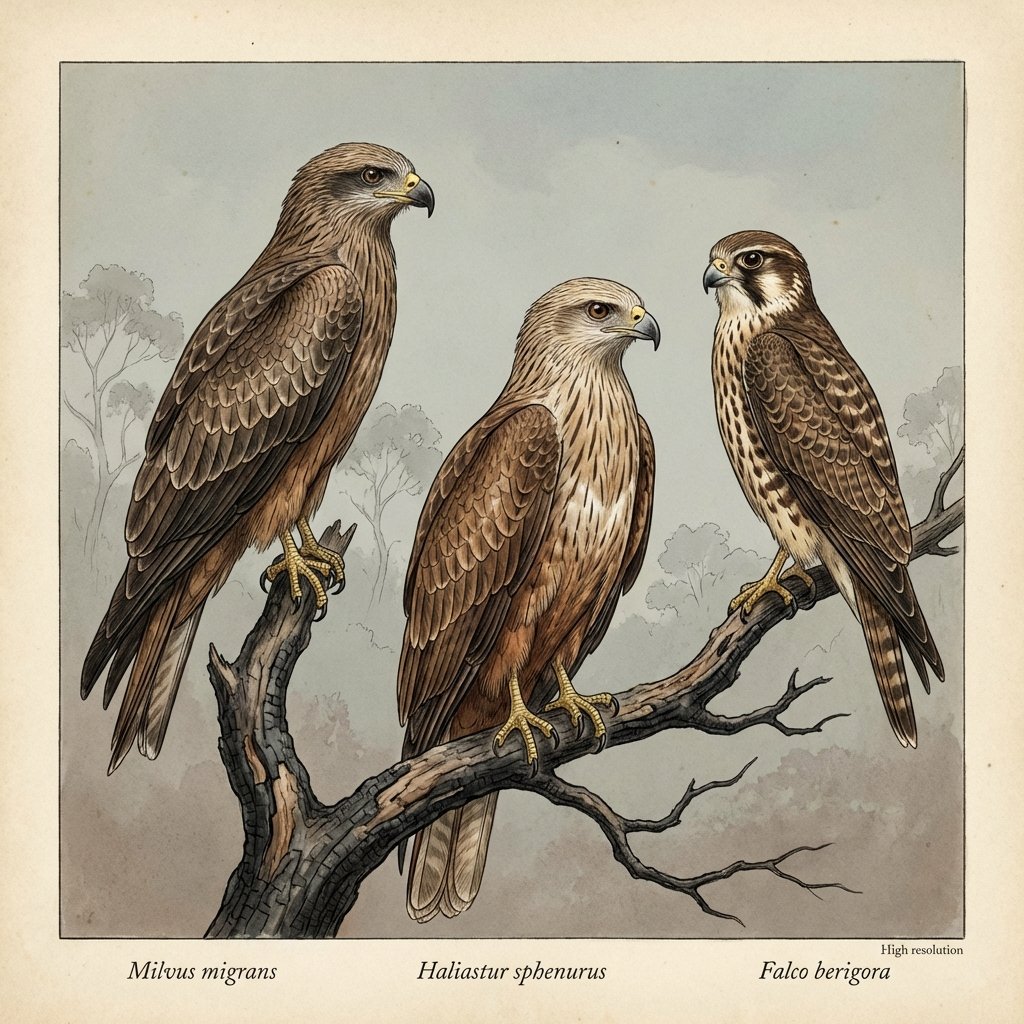
There are three main species of raptors (birds of prey) that have been seen spreading flames in Australia's northern savannas.
BLACK KITE
Milvus migrans
The most abundant and social of the three. They often gather in hundreds around major fires.
WHISTLING KITE
Haliastur sphenurus
Named for its loud whistle. These birds have been seen flying ahead of fire fronts with smoking sticks in their talons.
BROWN FALCON
Falco berigora
Highly active and focused. Multiple reports describe these falcons specifically moving fire to flush out hidden prey.
03. HOW THEY DO IT
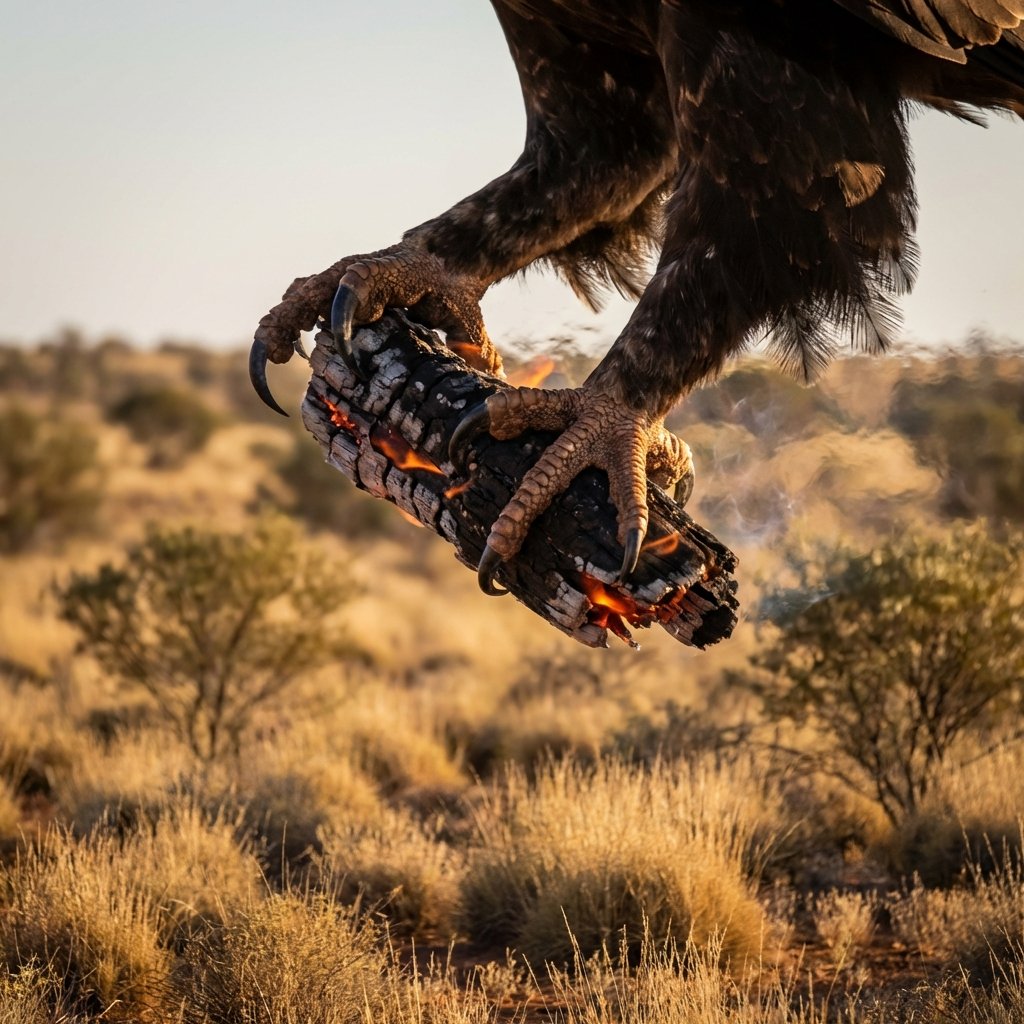
Spreading fire is a deliberate five-step process for a Firehawk:
- 1. Ignition Gathering: Birds fly directly into active fires, signaled by the rising smoke.
- 2. Stick Acquisition: They find a smouldering stick and grab it with their beak or talons.
- 3. Transport: They fly up to 1 kilometre away, often crossing roads or rivers.
- 4. Deposition: The burning stick is dropped into dry, unburnt grass.
- 5. Feeding: As the new fire flushes out insects and lizards, the bird swoops in for an easy meal!
04. DO WE HAVE PROOF?
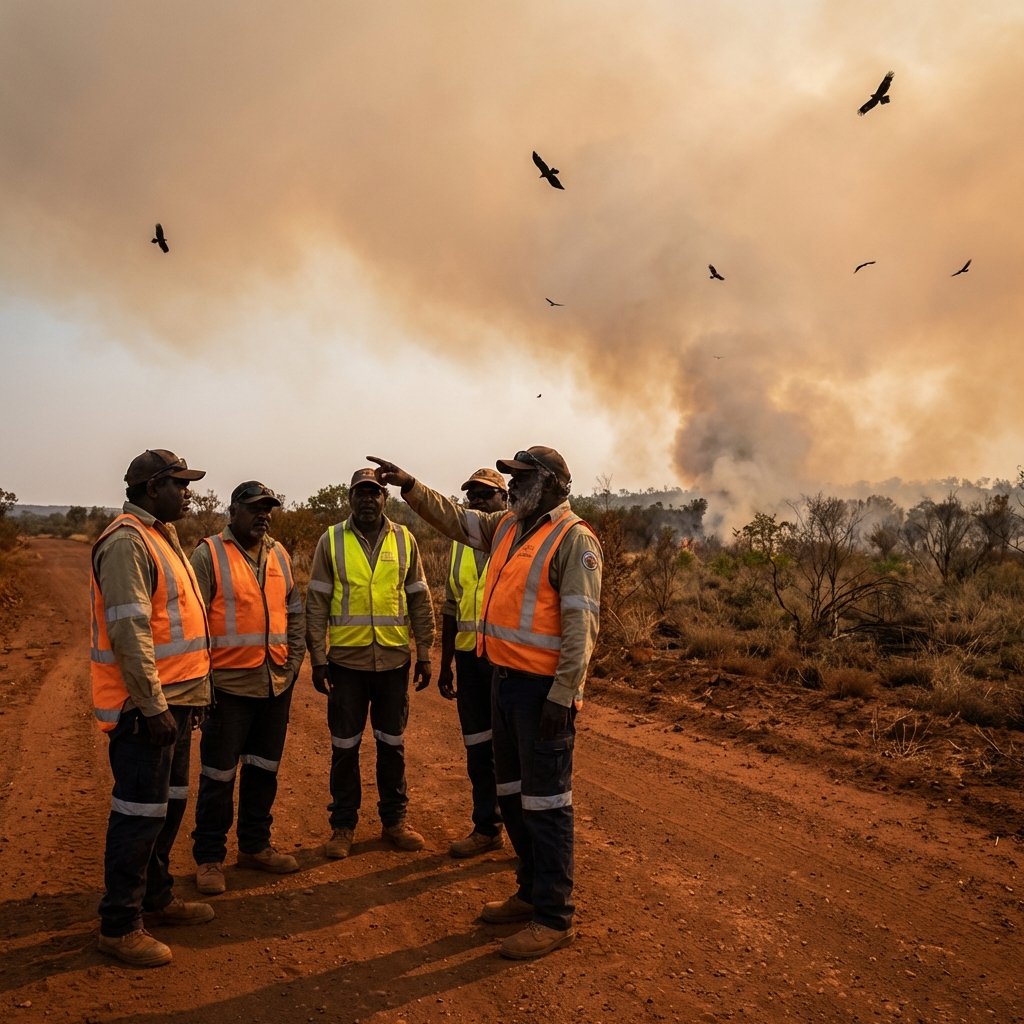
Evidence for this behaviour comes from three main sources:
Indigenous Knowledge
Aboriginal groups across Northern Australia have documented these birds for centuries. Over 20 records exist from 12 different groups, some recorded as far back as 1963.
Expert Observers
Scientists and linguists like Kim Akerman and Denise Angelo have witnessed single birds spreading fire on several occasions during field work.
Firefighters & Rangers
Detailed accounts from practitioners confirm these sightings:
- Nathan Ferguson (Barkly Tablelands): Witnessed kites carrying sticks over 50 metres.
- Dick Eussen (Northern Territory): Observed new fires ignite across firebreaks in the 1980s.
- Bob White (Roper River): Watched raptors move fire fronts up a valley.
- "MJ" (Western Australia): Saw birds work together to move fire across a river.
05. THE BIG QUESTION
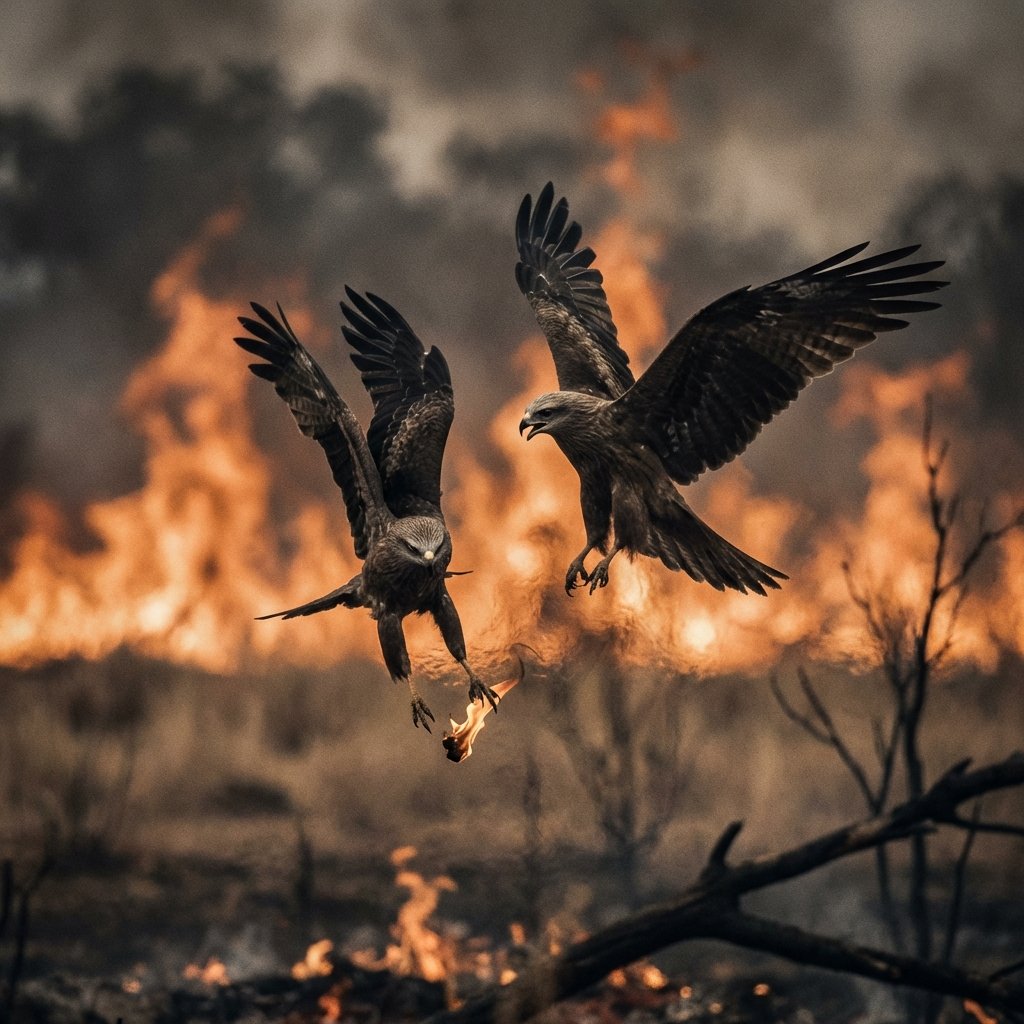
Is it Intentional or Accidental? This is the heart of the scientific debate.
WHY IT'S REAL:
- Reports are consistent and describe "goal-directed" actions.
- Only a small percentage of birds do it, suggesting it's a learned skill.
- Birds sometimes work together to move fire across barriers.
THE SKEPTICS SAY:
- We still don't have clear video of a bird starting a fire on purpose.
- It's hard to tell if they grabbed a stick by accident while hunting.
- We don't see this happening in other countries with similar birds.
06. LIVING WITH FIREHAWKS
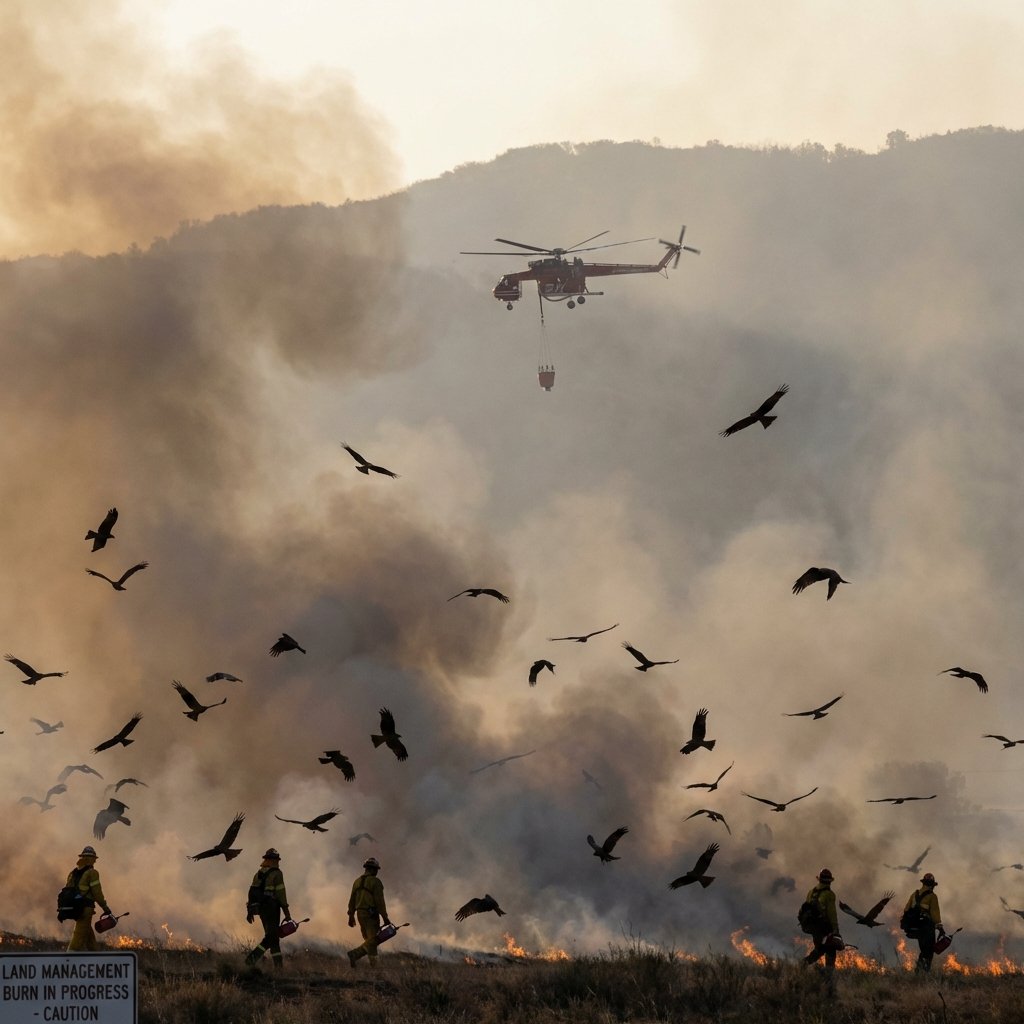
In the Northern Territory, fire managers don't wait for "perfect proof." Rangers and firefighters already plan for these birds when conducting controlled burns. They know that a Firehawk can easily carry a blaze across a firebreak, making their job much more difficult!
07. THE SEARCH CONTINUES
As of 2026, the case of the Firehawk remains "well-supported but not conclusively proven" by Western science. Researchers are still hoping to capture that perfect video during a controlled burn. However, the connection between ancient Indigenous stories and modern observations has already changed how we think about animal intelligence.
08. CONCLUSION
The Firehawk is a bridge between two worlds of knowledge. It teaches us that nature is full of surprises and that human beings aren't the only ones who can master the power of fire. For students in Australia, it's a reminder to look closely at the bush—there might be a master hunter at work in the smoke!